Multimodal Monday #42: See, Click, Speak
Week of January 19 - January 25, 2026: D4RT turns video into 4D space, PersonaPlex enables full-duplex speech with persona control, EvoCUA hits #1 on OSWorld, and Linum V2 brings 720p video gen to 2B parameters.

📢 Quick Take (TL;DR)
- Video models unlock the fourth dimension - Google's D4RT and the new OmniTransfer framework are pushing video understanding beyond simple playback, enabling AI to perceive time, space, and motion as manipulatable 4D data structures.
- Agents are learning to see and click - From Microsoft's Rho-alpha controlling robots to Meituan's EvoCUA mastering computer interfaces, we are seeing a surge in "action-first" multimodal models that translate vision directly into physical or digital execution.
- Speech becomes a two-way street - New models like NVIDIA's PersonaPlex and Qwen3-TTS are moving us towards real-time, full-duplex conversational AI that can listen, think, and speak with human-like latency and emotional nuance.
🛠️ Tools, Models and Techniques
PersonaPlex
NVIDIA released a real-time, full-duplex speech-to-speech model that lets you control the speaker's persona through text prompts. Built on the Moshi architecture, it handles simultaneous listening and speaking with low latency, allowing for natural interruptions and back-and-forth conversation.
Why it matters: True conversational AI needs to be more than just a fast transcriber. PersonaPlex shows that we can build systems that not only understand words but also embody specific personalities and handle the messy, overlapping nature of real human dialogue.
Research Page | GitHub
Qwen3-TTS
This open-source text-to-speech model can clone voices, design new ones, and speak naturally in 10 languages in real-time. Its dual-track architecture and custom audio tokenizers keep quality high while maintaining the speed needed for live applications.
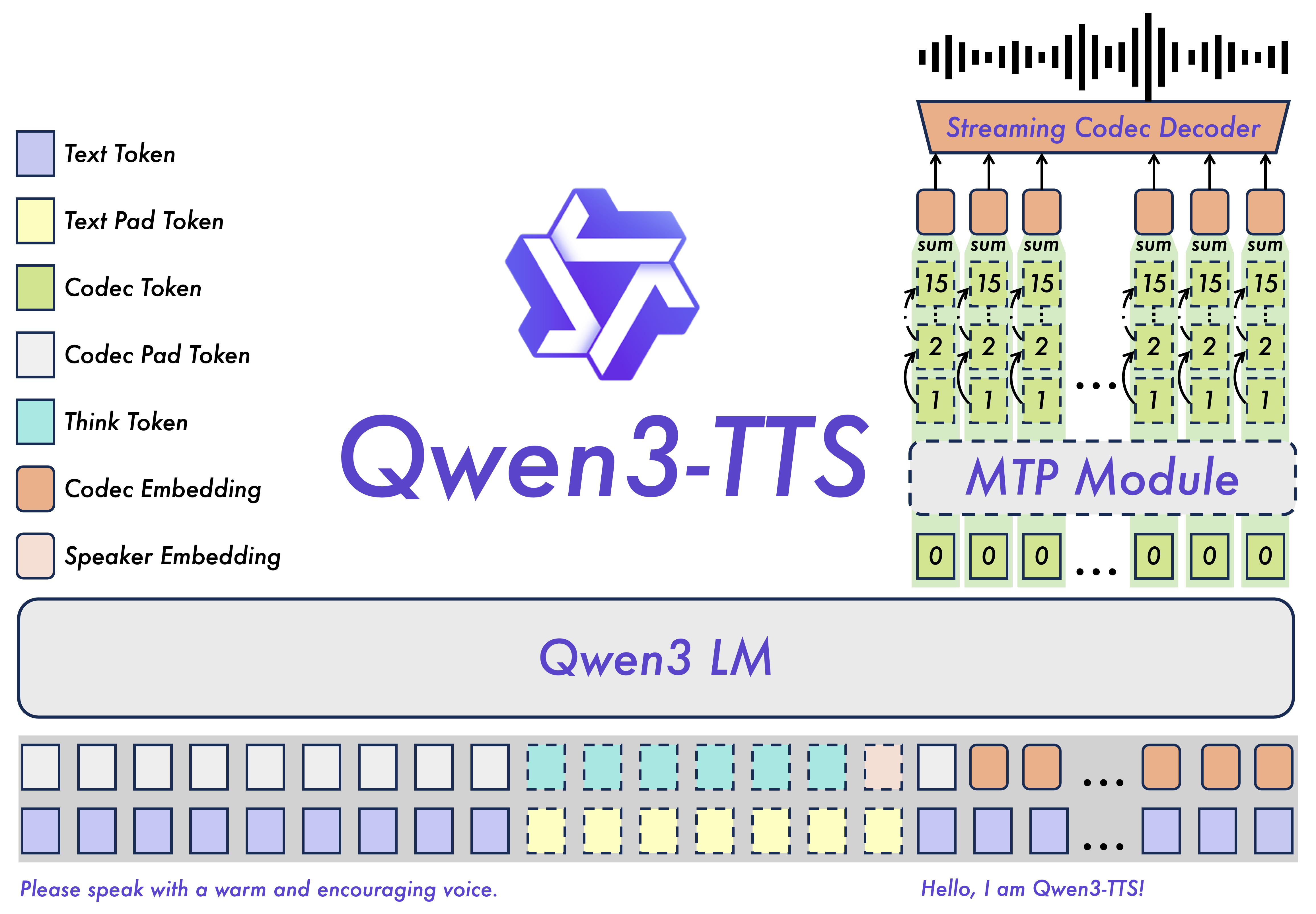
Why it matters: High-quality, low-latency TTS is the missing link for voice agents. By open-sourcing a model that rivals proprietary APIs, Qwen3-TTS democratizes access to the kind of voice technology needed to build responsive, human-level assistants.
Models | Writeup
Linum V2
A new 2B parameter text-to-video model that generates high-quality 720p video from text prompts. Trained from scratch by a small team, it aims to make animation accessible and affordable without requiring massive compute clusters.
Why it matters: Video generation has been dominated by massive, closed-source models. Linum V2 proves that efficient, smaller-scale models can still deliver impressive results, opening the door for more developers to integrate video creation into their apps.
Launch Post | Hugging Face
OpenVision 3
A unified visual encoder designed for both understanding and generation tasks. It outperforms standard CLIP-based encoders in generative frameworks, proving that a single model can effectively handle the dual tasks of analyzing images and creating them.
Why it matters: Most multimodal systems use separate models for "seeing" and "drawing." OpenVision 3 suggests a more efficient future where a single "visual brain" handles both perception and creation, simplifying pipelines and potentially improving semantic consistency.
Paper | GitHub
EvoCUA
Meituan's "Evolutionary Computer Use Agent" is now the #1 open-source model for controlling operating systems. It achieves 56.7% on the OSWorld benchmark by generating its own synthetic training tasks and learning from its failures in a sandbox environment.
Why it matters: Training agents to use computers is hard because real-world interaction data is scarce. EvoCUA's self-improving loop shows a path forward where agents teach themselves to navigate software, reducing the reliance on expensive human demonstrations.
Paper | GitHub
- Rho-alpha: Microsoft's first robotics model derived from the Phi series, translating language into bimanual robot actions. Story
- Waypoint-1: A real-time interactive video diffusion model from Overworld. Blog
- VibeVoice ASR: A speech-to-text model for long-form audio with speaker identification and custom hotwords. Model
- Stitch MCP Server: Google's new tool for connecting Gemini to external data and skills via the Model Context Protocol. Docs
- RF-DETR: A state-of-the-art real-time segmentation model from Roboflow, released under Apache 2.0. Blog
- Remotion Skills: New MCP skills for the Remotion video creation framework. GitHub
- VIGA: An agent that converts images into 3D Blender code, treating vision as inverse graphics. Project Page
- LuxTTS: A lightweight TTS model that is 150x faster than real-time. GitHub
- LightOnOCR: A vision-language model for converting complex documents into clean, ordered text. Hugging Face
- Higgsfield AI Influencer Factory: A studio for creating consistent AI characters and videos. Studio
- Docs2Synth: A framework for training document retrieval systems using synthetic data. Paper
🧠 Research Highlights
D4RT: Seeing the World in 4D
Google DeepMind introduced D4RT, a unified model that turns video into 4D representations (3D space + time). Unlike previous methods that process video frame-by-frame, D4RT understands the entire spatio-temporal volume, allowing it to track objects and geometry consistently over time.