Find any moment
in any video.
Ask in plain language. Mixpeek searches what's on screen, what's said and the text shown, across the files in your own S3, GCS or Azure bucket, and returns the exact second. Images, audio and documents work the same way.
10 videos · 977 moments










Every file becomes data you can query.
Mixpeek reads each file for what's in it: faces and objects in a frame, the layout of a document, who is speaking in a recording. It stores what it finds as fields your software and your agents can search, filter, rank and join.
Hover or tap a card to preview the search it powers.
 Person · 0.97Face · 0.95Handbag · 0.92Video · 00:04:12
“A woman carrying a tan tote bag walks past a red storefront.”
transcript · “…meet me at the corner in five.”
 HeaderChartBodySignaturePDF · resume.pdf
Header, body, charts, and signature detected as typed regions.
OCR · 1 header · 3 sections · 1 signature

Who spoke when, aligned to the transcript and the timeline.
audio · 2 speakers · matched at 00:01:30
Pick a job and watch it run on real data.
Each template is a working pipeline for one job, from moderating footage to finding one person across an archive. Open one to see what it finds, then deploy the same pipeline on your own bucket from Studio.
Sources, buckets, collections, and retrievers ship together.
One YAML file mirrors the rendered flow diagram.
Thresholds and review rules are attached to the template.
 Scene · 0.91Camera · 0.89Video · footage.webpillustrative
Footage Intelligence at Archive Scale
Find the take in an archive nobody has watched end to end.
- production_id
- the key one team groups by
- job_id
- the key the other team groups by
Pexels / Wolrider YURTSEVEN
 Person · 0.94Product · 0.87Video · ad_00412illustrative
Creative DNA for Ad Archives
Search an ad archive by what is actually in the creative.
- brand
- brand_slug carried on every document
- segments
- per-scene, each one searchable
Pexels / ANTONI SHKRABA production
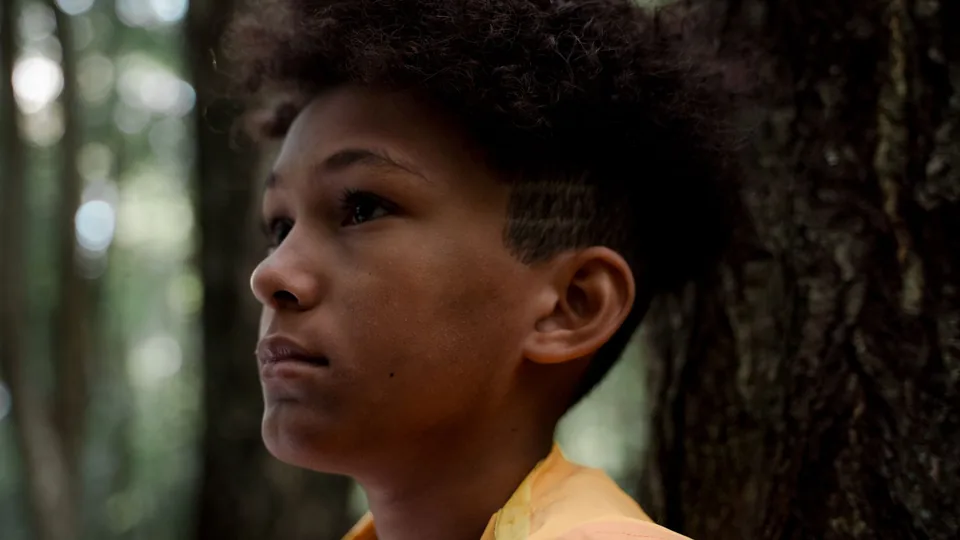 Person · 0.92Face · 0.95Video · 00:01:07illustrative
Video Moderation Extraction Foundation
Cut raw footage down to the subset you can defend training on.
- age gate
- flagged for under-18 review
- decision
- routed to a person, with its reason
Pexels / Ron Lach
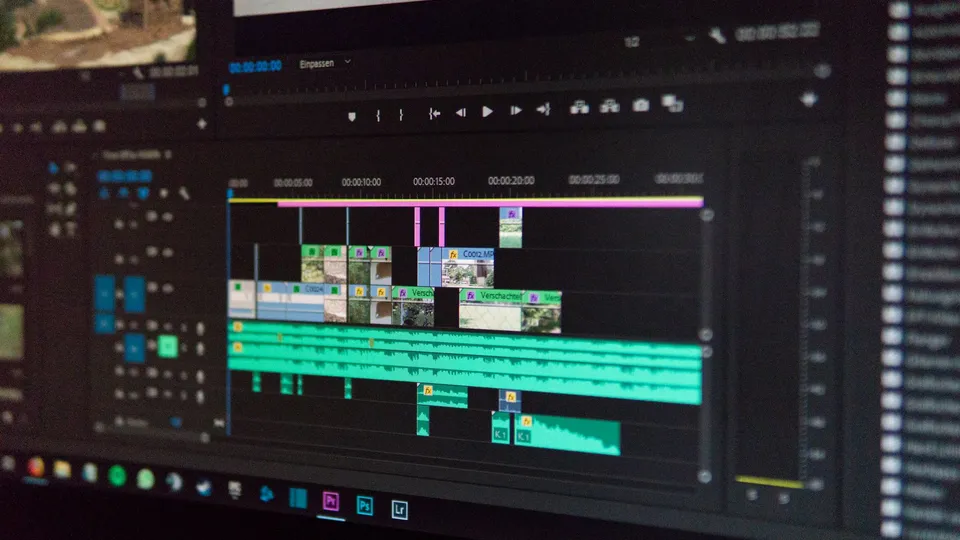 Scene · 0.92Transcript · 0.89Video · scene_0007illustrative
Contextual video match
Place against the scene an article is actually about.
- segments
- cut where the scene changes, each embedded alone
- match
- article text against the scene, not the whole file
Pexels / Alex Fu
 Participant · 0.93Screen · 0.90Session · clinic_04illustrative
UX session analysis
Ask one question across every session and get every participant's answer.
- task
- boundaries taken from the moderator's own marks
- roll-up
- grouped on participant_id, so nobody is missing
Pexels / Darlene Alderson
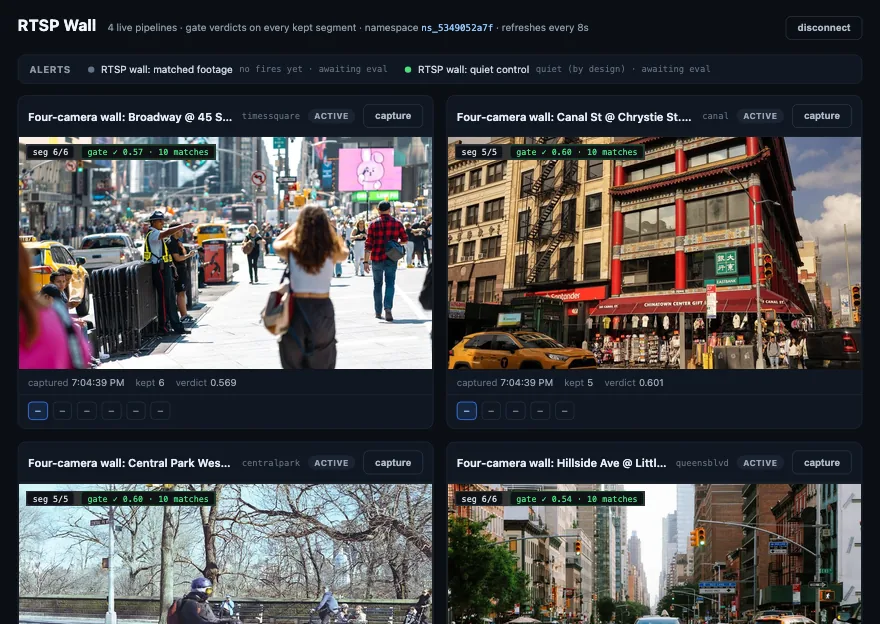 RTSP Live Monitoring Wallillustrative
RTSP Live Monitoring Wall
Turn always-on RTSP cameras into a searchable monitoring wall where quiet footage is skipped before extraction, kept segments carry gate verdicts, and email alerts fire from retriever results.
Mixpeek RTSP demo wall, ns_5349052a7f, 2026-09-08; camera stills from Pexels (Artem Zhukov, Darya Sannikova, Garrison Gao, Oscar Portan)
 Person · 0.96Face · 0.94Video · 00:02:41illustrative
Cast Identification
Give it one reference photo and every appearance of that person comes back.
- face_id
- cast_0417, matched across the library
- scene
- solo, stage-lit
Pexels / Tima Miroshnichenko
 Person · 0.95Reference · 0.88Image · ref_2208illustrative
Creative Lineage Search
Trace where a look came from, across work already in your library.
- concept
- mood board, pinned reference
- lineage
- 3 earlier campaigns share it
Pexels / Ron Lach
 Asset · 0.97Layout · 0.90Asset · print_q3_07illustrative
Brand Compliance Checker
Score every asset against your brand criteria before it ships.
- brand score
- 0.82 against your rubric
- flagged
- accent colour outside the palette
Pexels / George Milton
 Face · 0.93Person · 0.91Video · 00:00:18illustrative
Contextual Ad Targeting
Place ads against what the content means, with nothing tracking the viewer.
- category
- IAB18, family and home
- signals used
- the content, and nothing about the viewer
Pexels / Ketut Subiyanto
 Panel · 0.89Frame · 0.84Image · board_14illustrative
Storyboard Scene Builder
Hand it a brief and get back the scenes that fit, in an order you can build from.
- brief
- three-beat opener
- returned
- scenes already in build order
Pexels / Thijs van der Weide
 Object · 0.98Image · sku_8841illustrative
Visual Product Search
Shop by picture: a photo in, visually similar catalogue items out.
- embedding
- image and text in one index
- returns
- catalogue items ranked by look
Pexels / Tara Winstead
"What concepts exist in my data that nobody has labeled yet?"
No keyword, example, or prompt can answer that: they all assume you already know what you're looking for. Mixpeek clusters what belongs together on its own, so a natural hierarchy surfaces instead of a flat pile of tags: a taxonomy built from your data, organized around what your business actually cares about.
That taxonomy is your ground truth, and it feeds back. Every search, every correction sharpens the features, the clusters, and the relationships. Your competitors' metadata decays. Yours compounds.
- Creative moments644
- └Unboxing214
- └Hands-on close-up121
- └Reveal + reaction93
- └Night driving88
- └Product on white342
every search + correction feeds back → sharper features, tighter clusters, truer taxonomy
One query across every modality.
Real questions rarely fit one feature. “Find the moment our CEO said guidance while the slide read Q4 outlook” needs a face, a spoken phrase, and on-screen text to line up at the same instant.
Mixpeek ties those features to the same object and timestamp, so an agent gets back the exact clip instead of three unrelated matches.
The CEO says “guidance” as the slide behind her reads “Q4 outlook.”
Pick your file types. Choose what to search by.
Video, image, audio, documents, text, or web: connect a bucket, pick the features you want to search by, and these pipelines run as they are. Every one is documented and open source in the extractor cookbook.
Search video by
7 live extractors
- Scenes, speech & visual similarityMultimodal (Video/Audio/Image) Try it live Docs
- Everything in one pass, any fileUniversal All-in-One Try it live Docs
- Whole objects: all their files as oneMulti-File Object Embeddings (Gemini) Try it live Docs
- The same face, across your whole libraryFace Identity (SCRFD + ArcFace) Try it live Docs
- Sounds and music, by how they soundAudio Fingerprinting (CLAP) Try it live Docs
- Text that moves across the screenScrolling/Marquee Text OCR Try it live Docs
- Your metadata, with zero computePassthrough (Storage Only) Try it live Docs
The templates above run on sample data. When you want the same thing on your own files, there are two ways in.
Bring your own vectors
You already have embeddingsMixpeek Vector Store (MVS): an agent-native vector store that runs on your object storage. Dense, sparse, and BM25 search. From $25/mo.
Connect your files
You have raw filesManaged indexing: point us at video, audio, or documents and we extract scenes, faces, OCR, transcripts, and embeddings. No pipeline to build. From $25/mo.
One install. Two paths.
Most retrieval stacks mean gluing together a vector DB, a file pipeline, and an agent layer. Mixpeek is one install with two ways in.
Bring embeddings
Plugs into your existing stack.
Connect your storage, point Mixpeek at it, and every file becomes searchable by what's inside it. No migration, no code changes.

Mux
Every Mux upload becomes searchable by face, scene, transcript, and on-screen text, with no manual tagging.
View integration →
Backblaze B2
S3-compatible extraction at 1/5th the cost. Store on B2, extract with Mixpeek, zero egress fees.
View integration →
Iconik
Every asset in your DAM becomes findable by what's inside it: scenes, faces, spoken words, on-screen text.
View integration →






From $25/mo. Usage-based everything.
Two products, one model: a flat monthly plan fee, with usage billed on top at the same published rates. MVS is priced by the vector, Managed by the unit of content.
Bring your own embeddings and pay by the vector. Dense, sparse, and BM25 search on your own object storage. Build starts at $25/mo with up to 1M vectors; Scale ($250/mo) covers 25M.
Start with MVSBring raw files and pay per unit of content, such as video by the minute and images by the thousand. Build includes $10 of processing a month and covers 100K objects; Scale ($250/mo) includes $100 and covers 1M.
Start with ManagedDedicated infrastructure, self-hosted options, SSO, SLA, security reviews, and hands-on architecture support.
Talk to usCommon questions.
What does Mixpeek do?
Mixpeek understands what's inside your files and turns that understanding into data your software can use. It reads video, images, audio and documents where they already live, in S3, GCS or any S3-compatible bucket, and extracts faces, scenes, objects, speech, on-screen text and document layout. Your application then searches, classifies, filters, ranks and moderates that data through one API.
Do I have to move my data?
No. Mixpeek reads from your existing S3, GCS, R2, Azure, or S3-compatible bucket. Your storage stays the system of record, and nothing leaves your cloud.
How fast is retrieval?
Hybrid queries (dense, sparse, and BM25) return in well under 100ms p95, even with vectors persisted on object storage rather than held in RAM.
Do I need embeddings to start?
No. Bring your own vectors with MVS, or point Managed at raw files and it generates embeddings and features for you.
What can Managed extract?
Faces, scenes, transcripts, OCR, labels, and embeddings from video, images, audio, PDFs, and documents, all indexed at the object level.
Can I self-host?
Yes. Deploy in your own cloud (BYO-Cloud) with encryption, role-based access, SSO, audit trails, and namespaces. We hold no SOC 2 or HIPAA certification today; see mixpeek.com/trust.
How does pricing work?
Both MVS and Managed start at a $25 monthly plan fee, with usage billed on top. MVS bills vectors stored, storage, writes and queries. Managed includes $10 of processing a month on Build, then bills extraction, embedding, indexing and retrieval per unit of content.