Multi-Vector Search vs. a Single Embedding
Multi-Vector Search vs. a Single Embedding
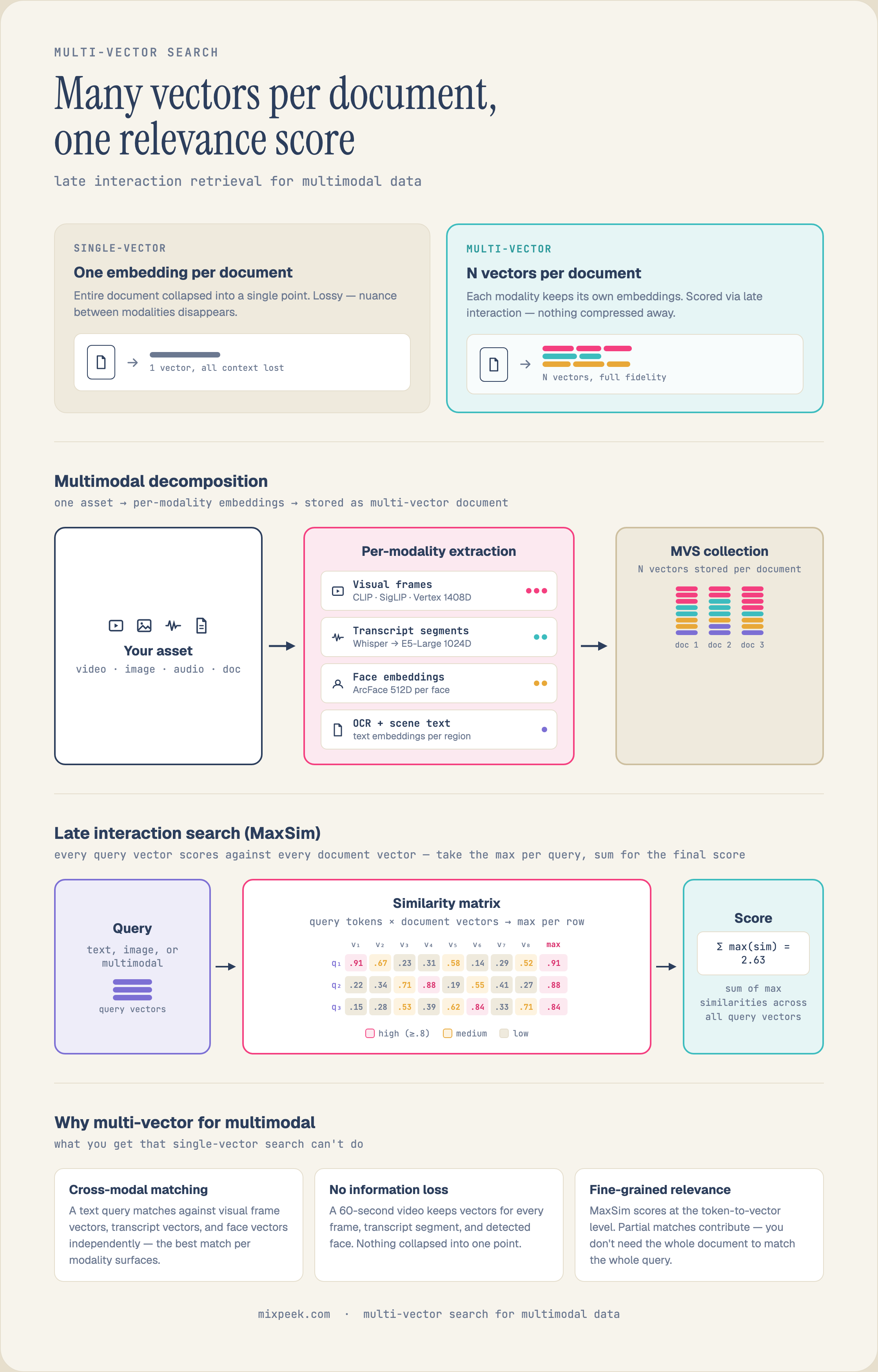
Most vector search stores one embedding per document. That works for text paragraphs. It doesn't work when your document is a 60-second video with speech, faces, scene transitions, and on-screen text.
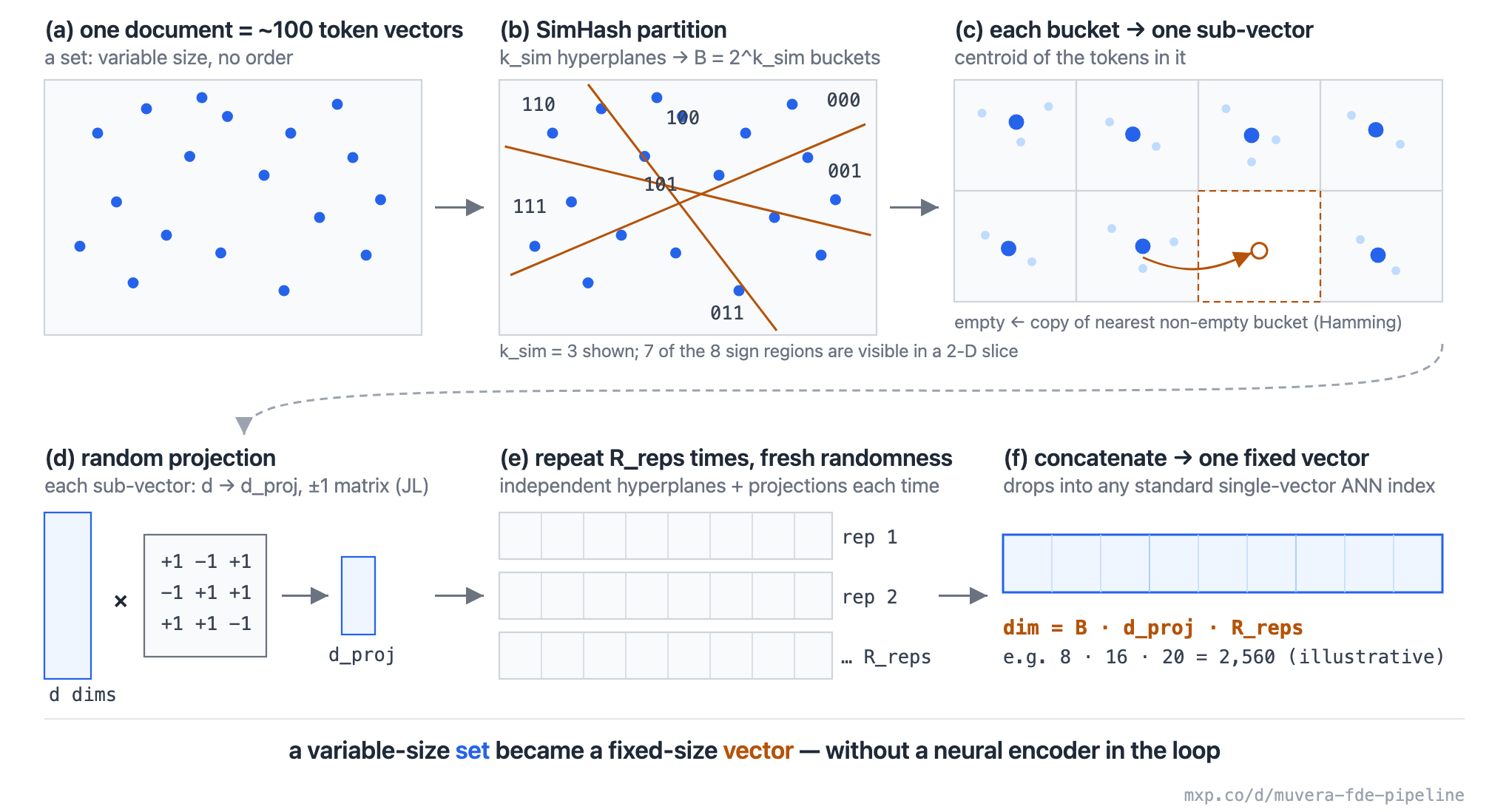
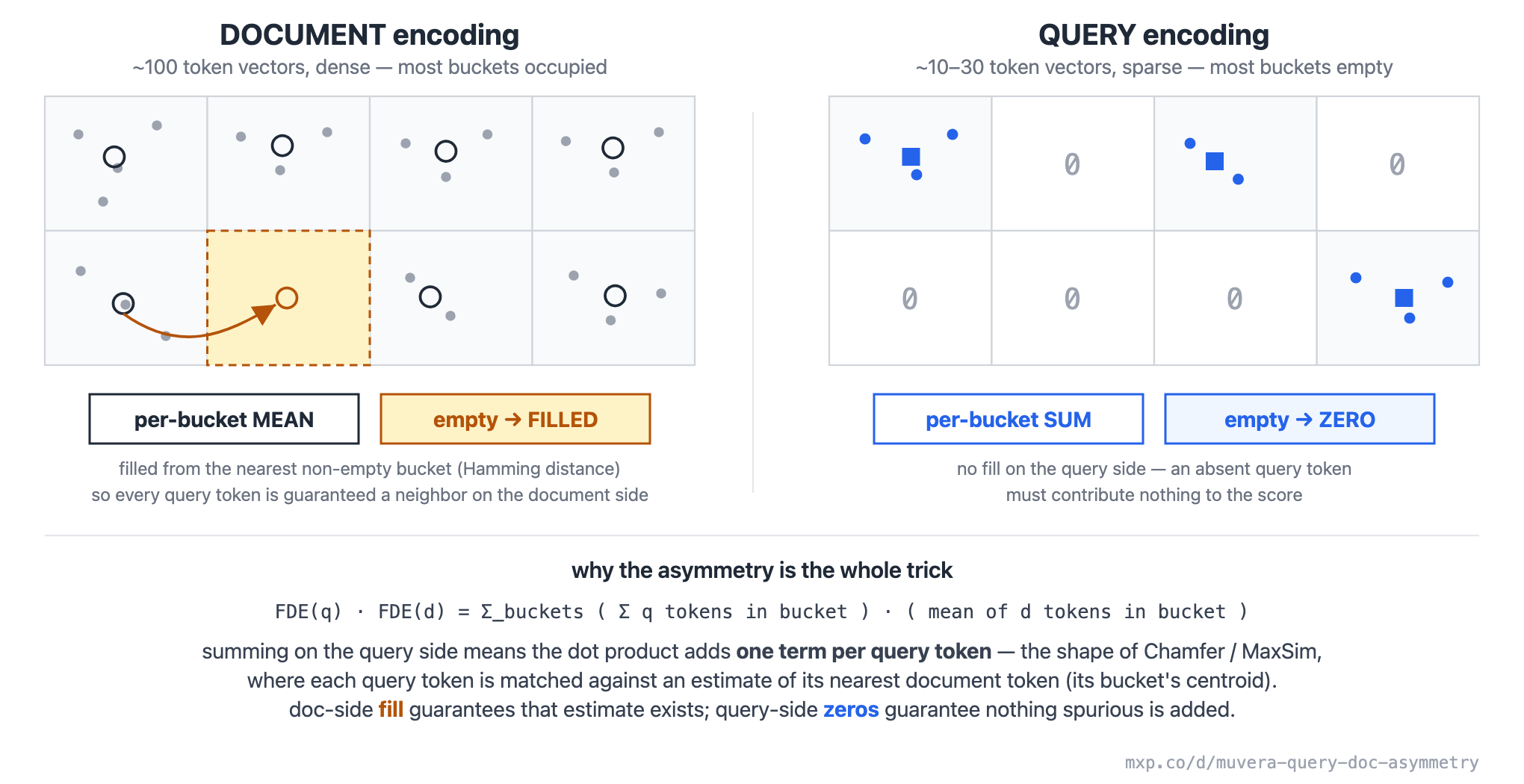
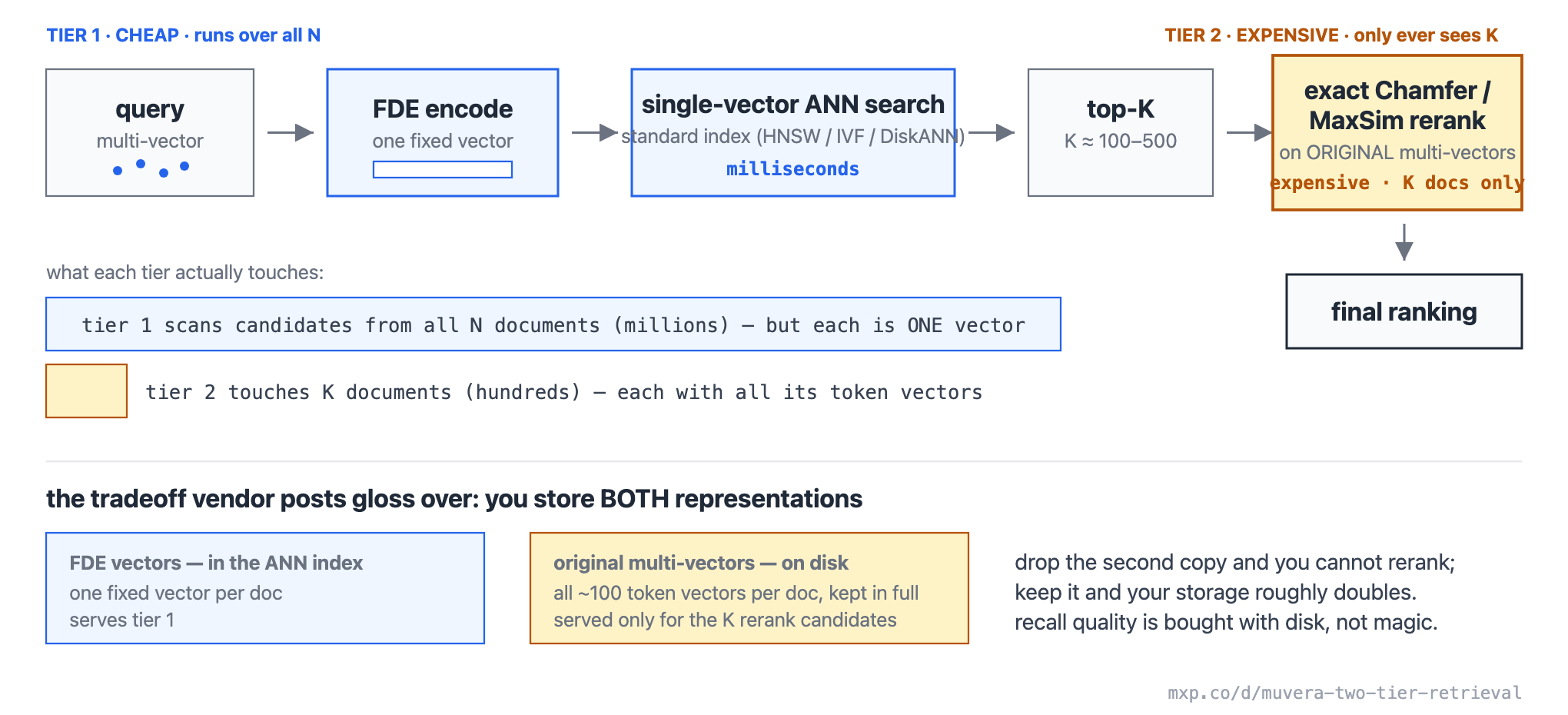
Multi-vector search stores N vectors per document: one per visual frame, transcript segment, detected face, OCR region. The document isn't a point in vector space. It's a set of points.
The scoring mechanism: late interaction (MaxSim). Every query vector is scored against every document vector. Take the max similarity per query vector. Sum them. That's your relevance score.
Why this matters for multimodal:
→ Cross-modal matching (a text query matches visual, audio, and text vectors independently
→ No information loss) every frame and segment keeps its own embedding
→ Fine-grained relevance, partial matches contribute at the token-to-vector level
Single-vector search collapses your data into one point and hopes for the best. Multi-vector search keeps full fidelity and scores at the granularity that actually matters.
mixpeek.com
Run this on your own data
Mixpeek turns video, images, audio, and documents in your object storage into searchable, timestamped results through one API.
Search your own data