Learned Indexes Explained: When a Model Replaces the B-Tree
The classic case for learned index structures: a model that has learned the data distribution can predict where a key lives, replacing B-trees and hash maps with smaller, faster learned models, the idea that seeded a decade of learned-index research.
Where this fits in Mixpeek
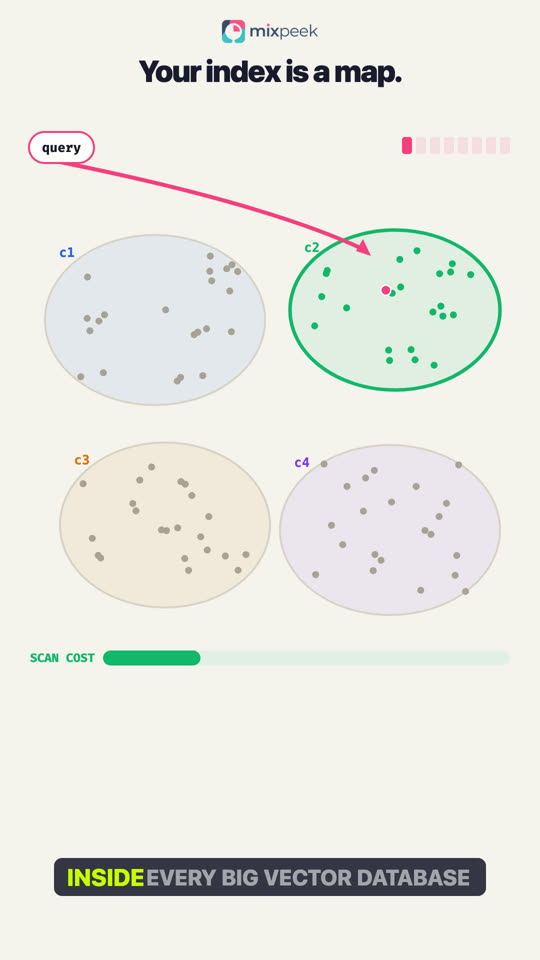
Every vector index is, at bottom, a structure that decides where a query should look. Learned indexes are the origin of the query-aware, data-adaptive indexing Mixpeek relies on to keep ANN search fast as corpora grow: the same lineage as the FAISS auction work in this hub. It's the foundational 'why' behind treating the index as something you learn from your data, not a fixed tree.
About this research
The index inside nearly every database is a B-tree. Learned indexes replace that structure with a model that predicts where data lives, trading guaranteed worst cases for large average-case wins in memory and speed. The video covers how they work, where they break, and why retrieval systems increasingly blend structure with learned components.
Put the research to work
Mixpeek turns video, images, audio, and documents in your object storage into searchable, timestamped results through one API: the retrieval stack these papers describe.
Search your own data