You search inside the file, not for it
You search inside the file, not for it
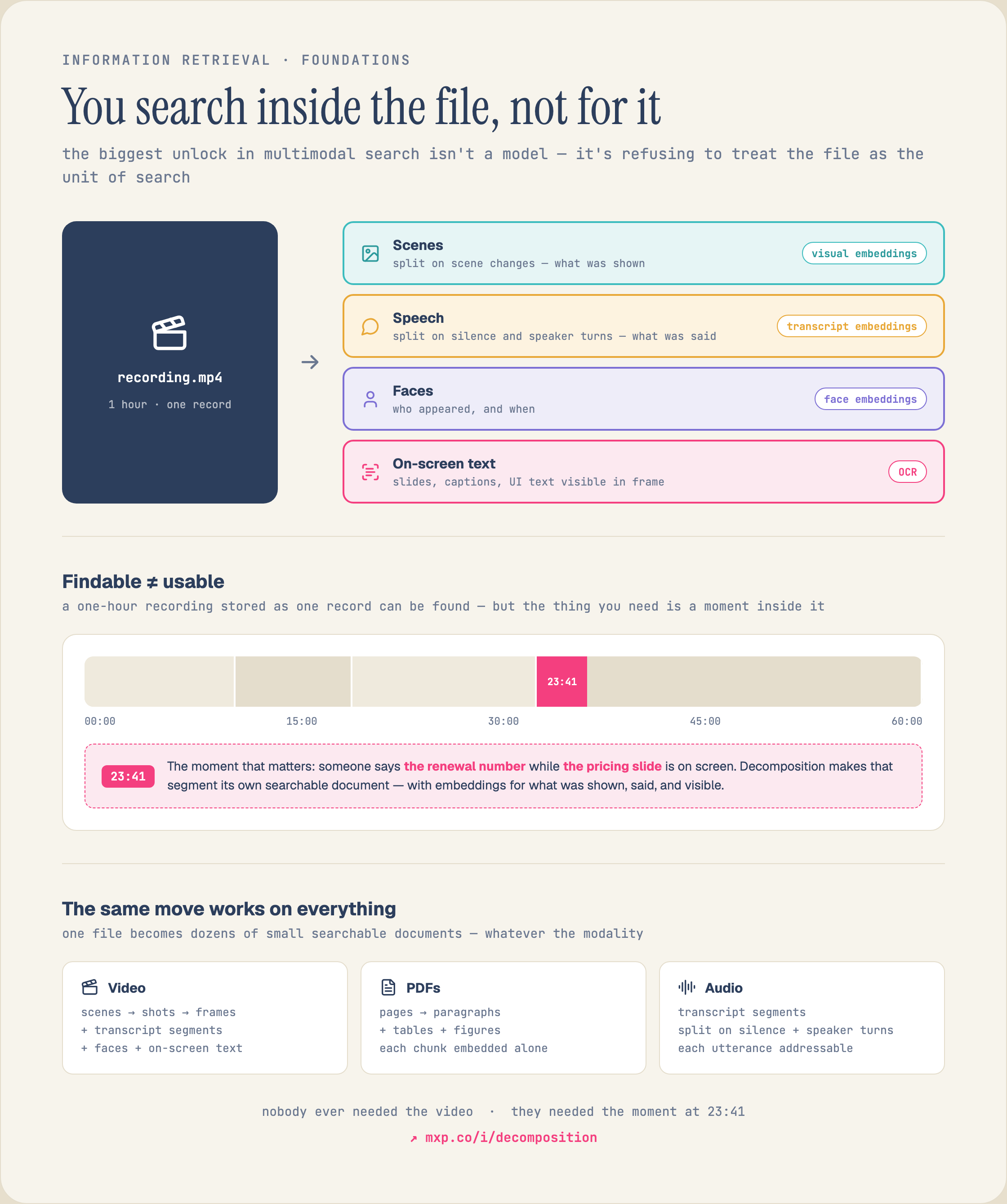
The biggest unlock in multimodal search isn't a model. It's a decision: stop treating the file as the unit of search.
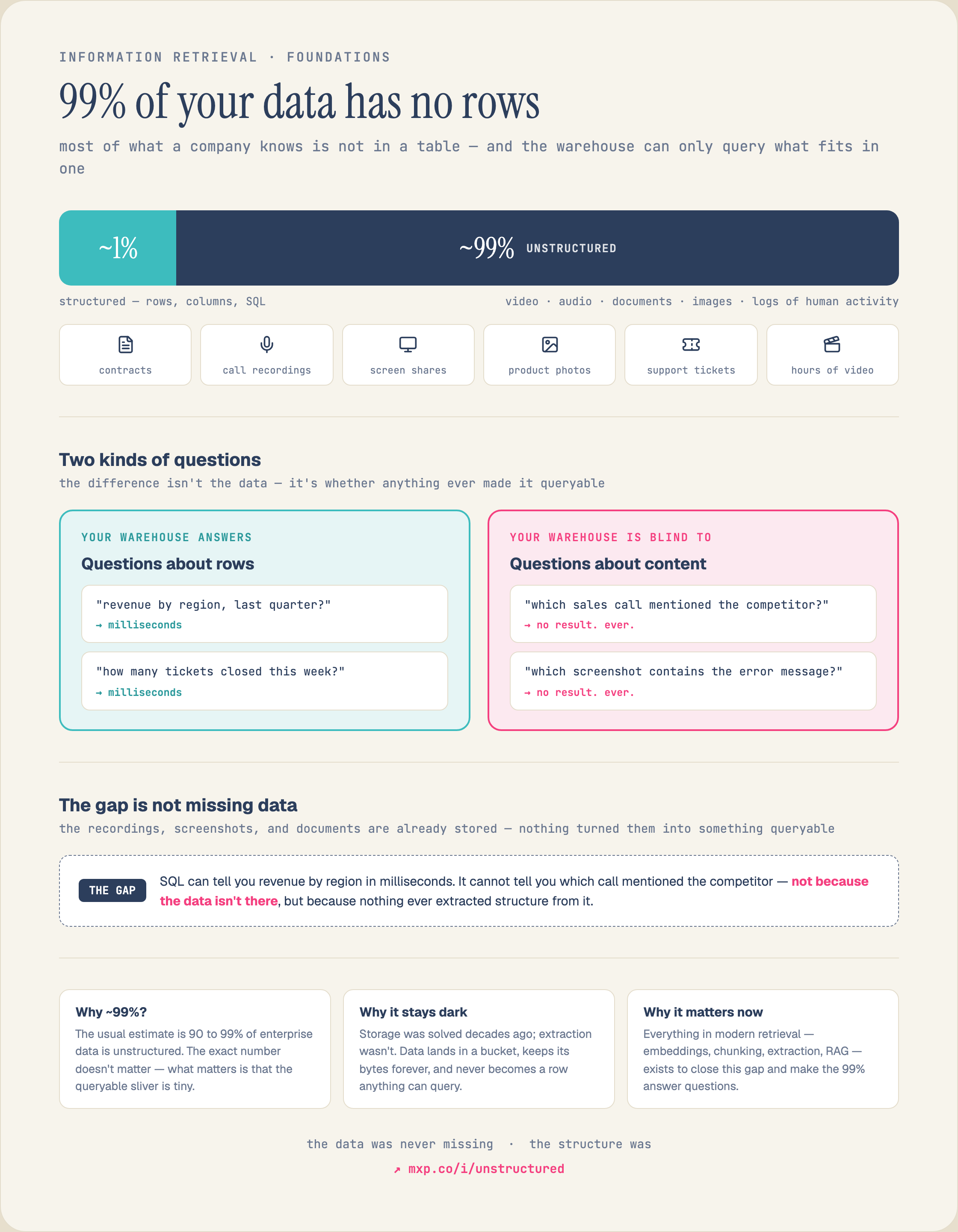
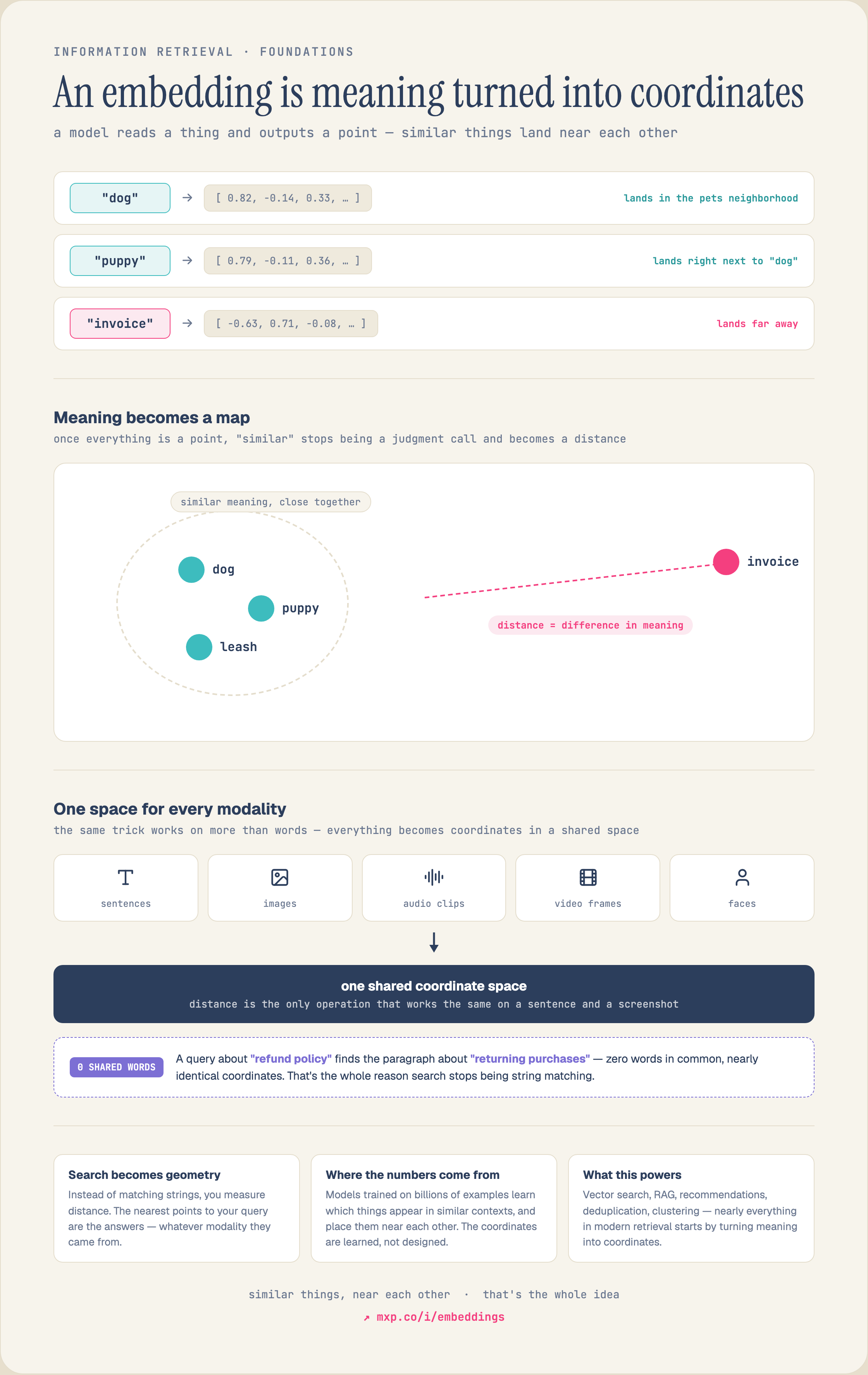
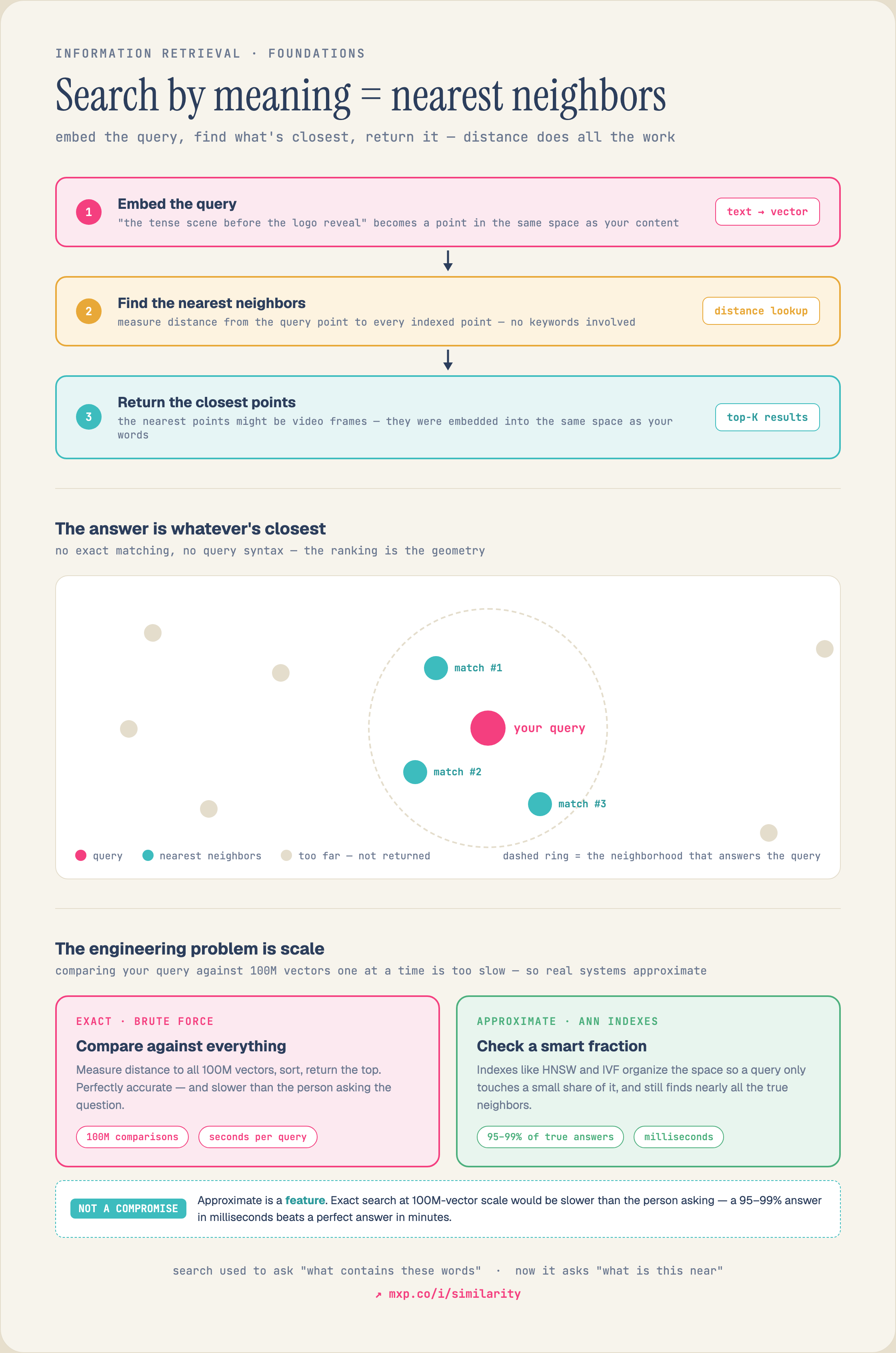
A one-hour recording stored as one record can be found, but not used. The thing you actually need is at 23:41, where someone says the renewal number while the pricing slide is on screen. So you decompose: split on scene changes, silence, speaker turns. Each segment gets its own embeddings for what was shown, what was said, who appeared, and what text was on screen.
One file becomes dozens of small searchable documents. The same move works on PDFs (pages, then paragraphs) and audio (transcript segments).
This is the first thing Mixpeek does to any file you ingest, and every downstream capability depends on it.
Nobody ever needed the video. They needed the moment at 23:41.
Where this diagram appears
Run this on your own data
Mixpeek turns video, images, audio, and documents in your object storage into searchable, timestamped results through one API.
Search your own data