99% of your data has no rows
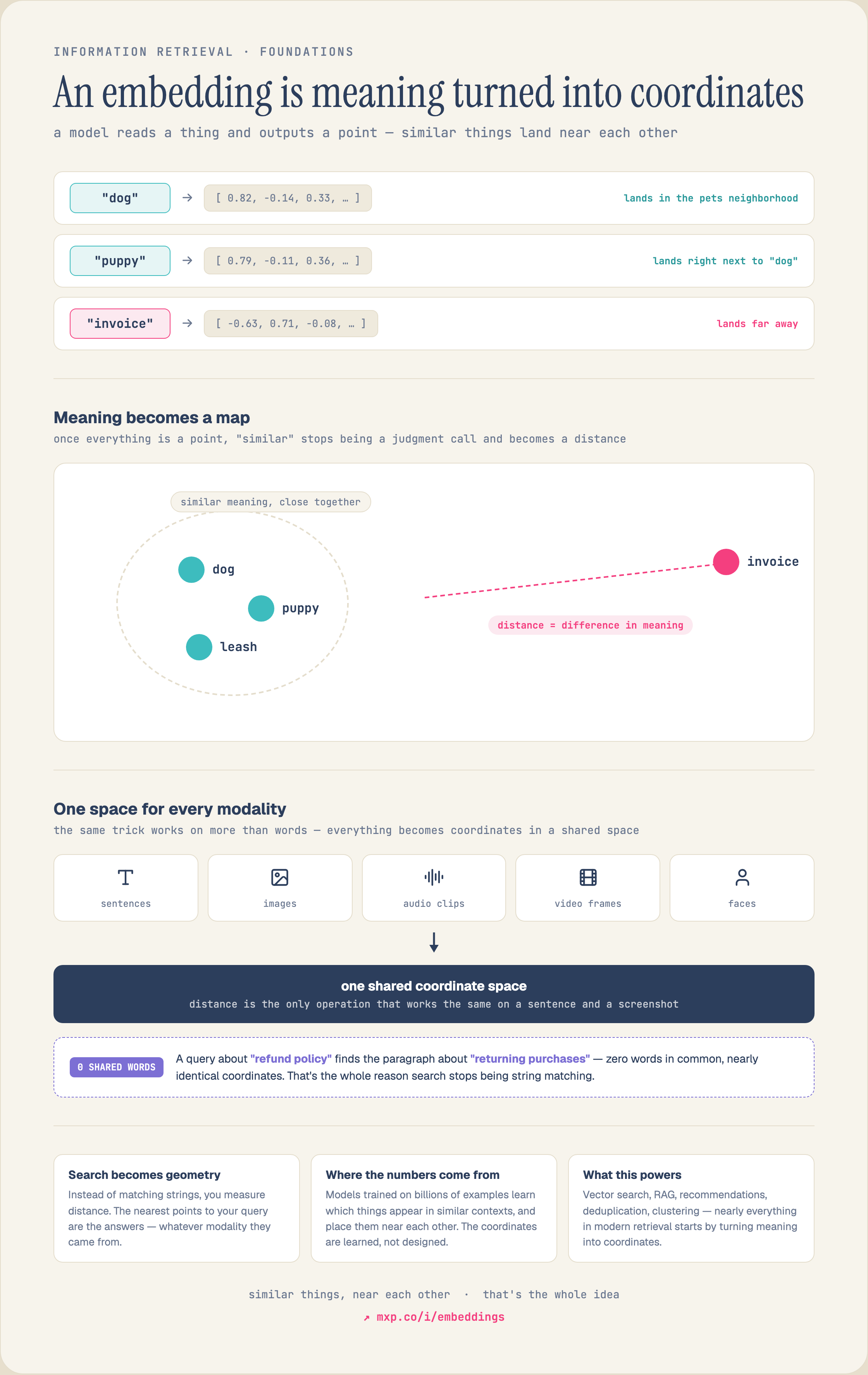
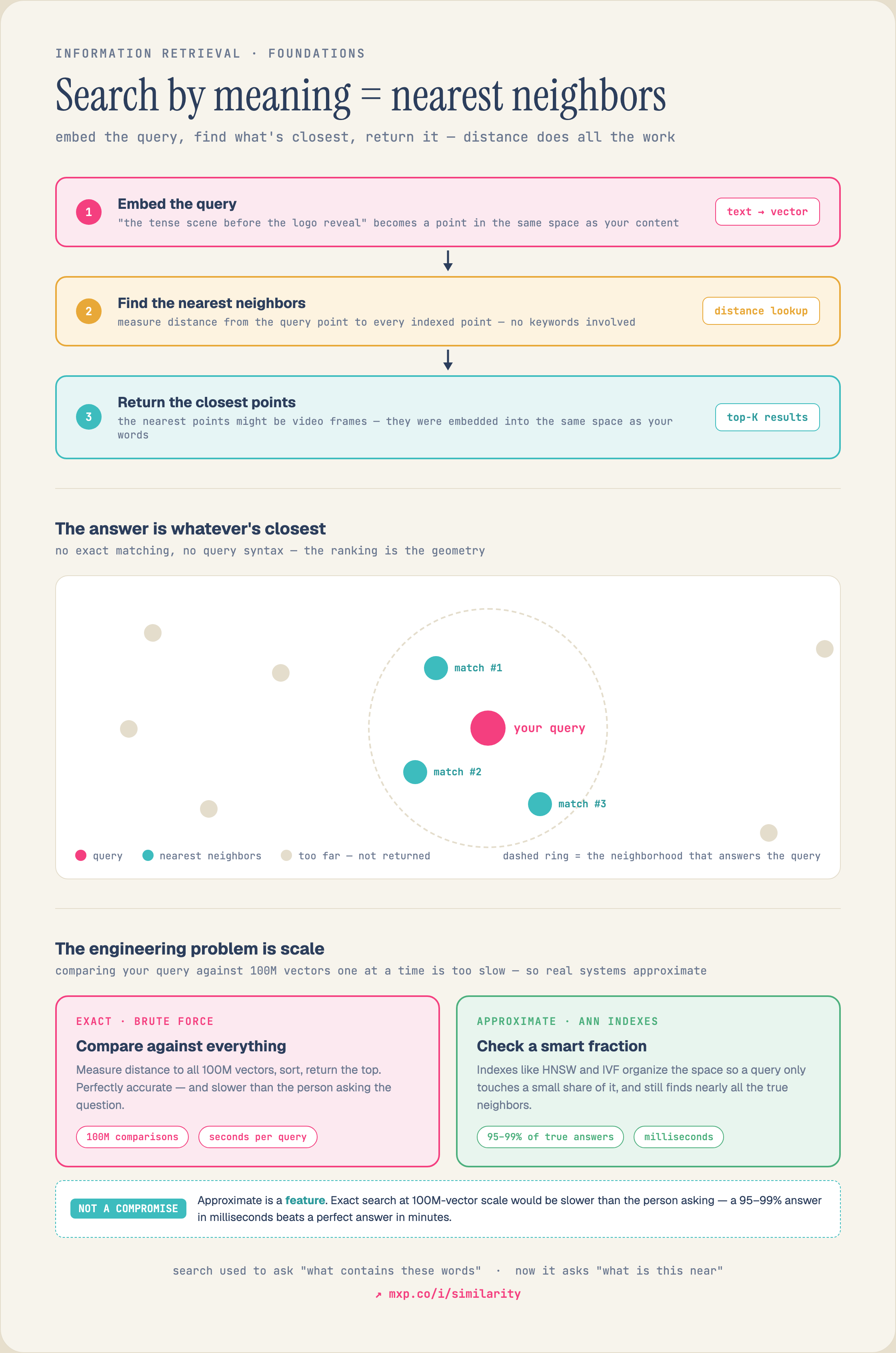
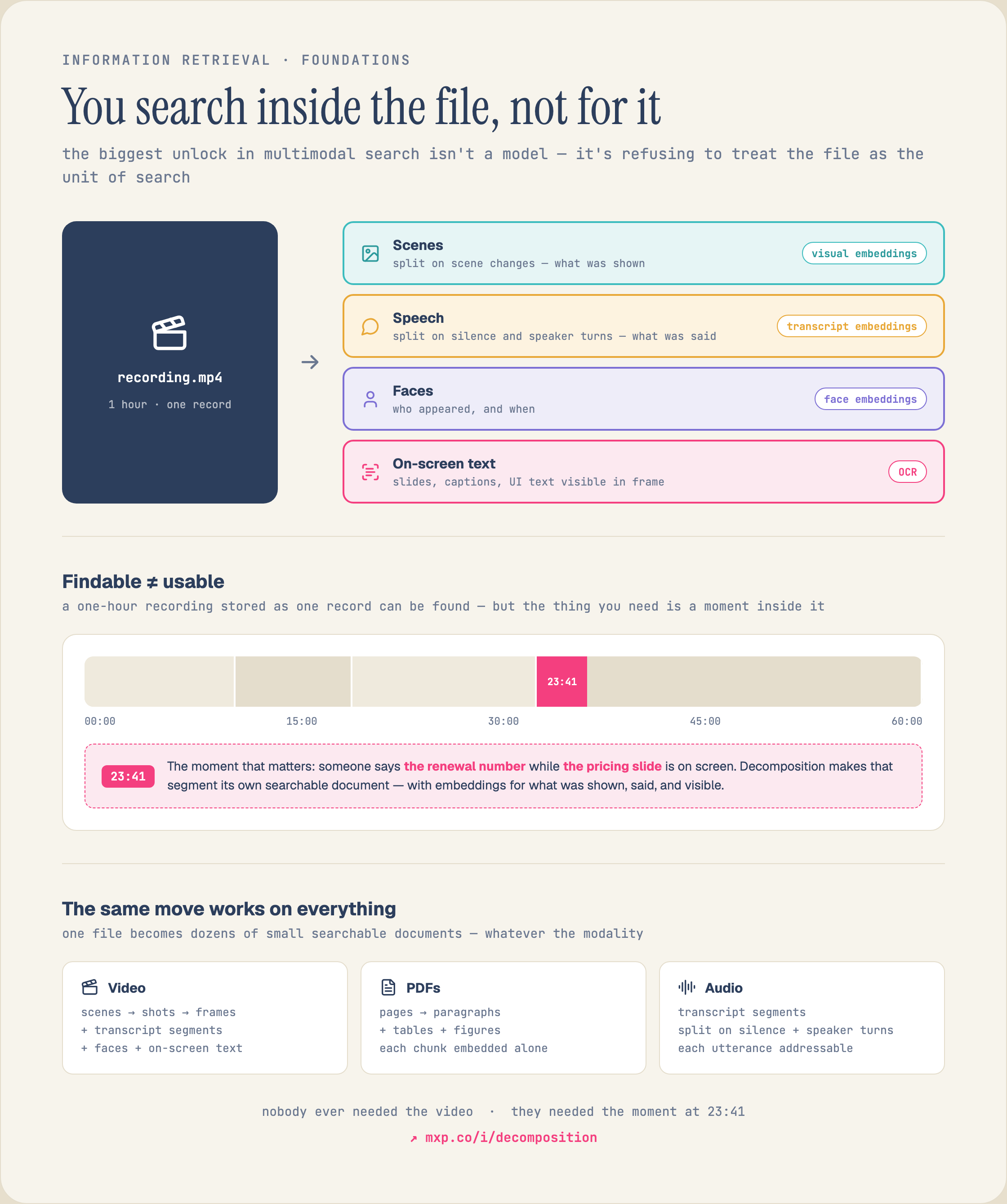
Most enterprise data is unstructured: unsearchable by meaning until it is extracted, embedded, and indexed.
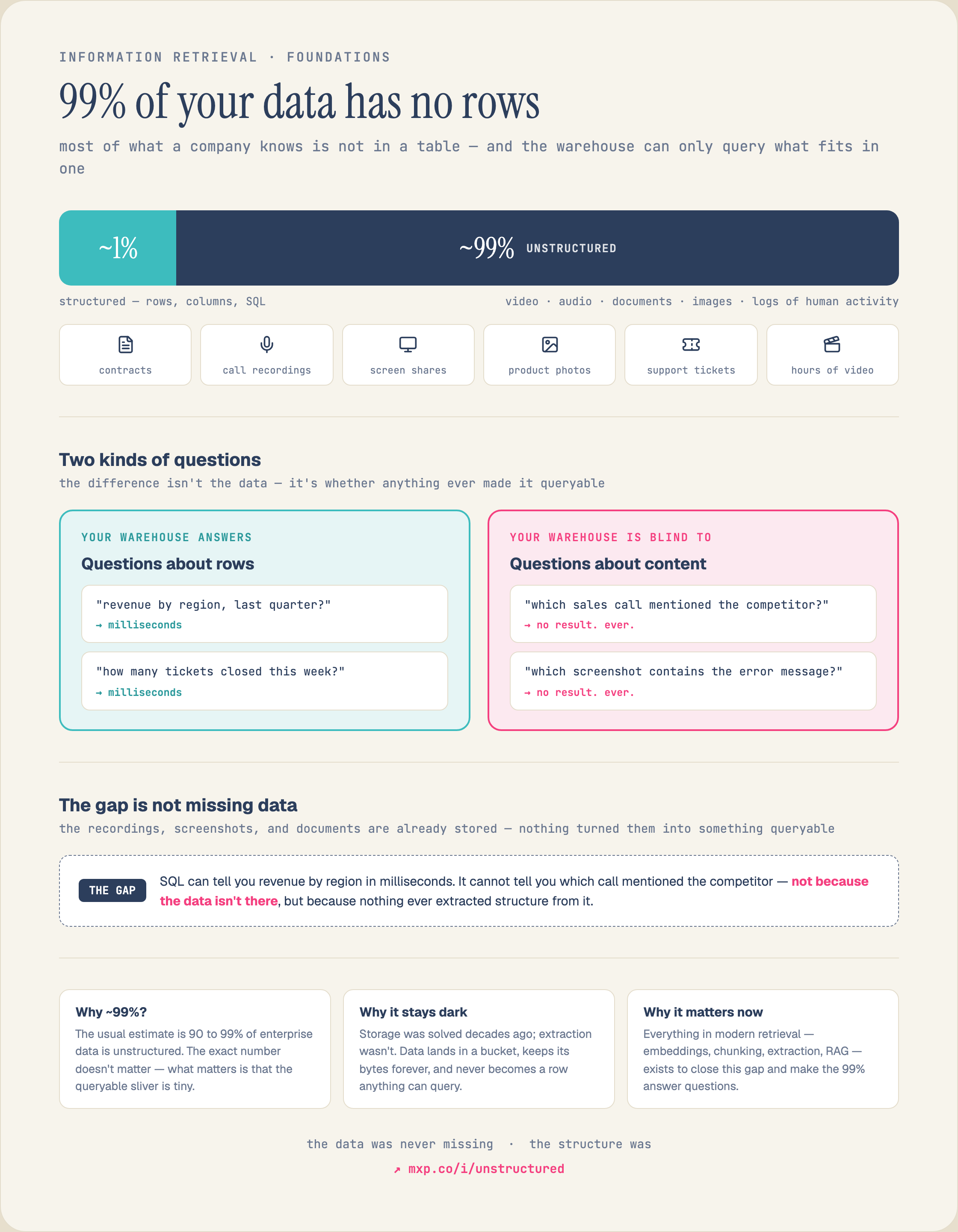
Start with the number that explains the whole space: most of what your company knows is not in a table.
Contracts, call recordings, screen shares, product photos, support tickets, hours of video. The usual estimate is 90 to 99% of enterprise data is unstructured, and honestly the exact number doesn't matter. What matters is that your warehouse can only query the sliver that fits in rows and columns.
SQL can tell you revenue by region in milliseconds. It cannot tell you which sales call mentioned the competitor, or which screenshot contains the error message. Not because the data isn't there. Because nothing ever turned it into something queryable.
That gap is where I've spent the last few years building Mixpeek. Everything else in this series (embeddings, chunking, retrieval) exists to close it.
The data was never missing. The structure was.
Where this diagram appears
Run this on your own data
Mixpeek turns video, images, audio, and documents in your object storage into searchable, timestamped results through one API.
Search your own data