Search by meaning = nearest neighbors
Search by meaning is a nearest-neighbor lookup: embed the query, return the closest points.
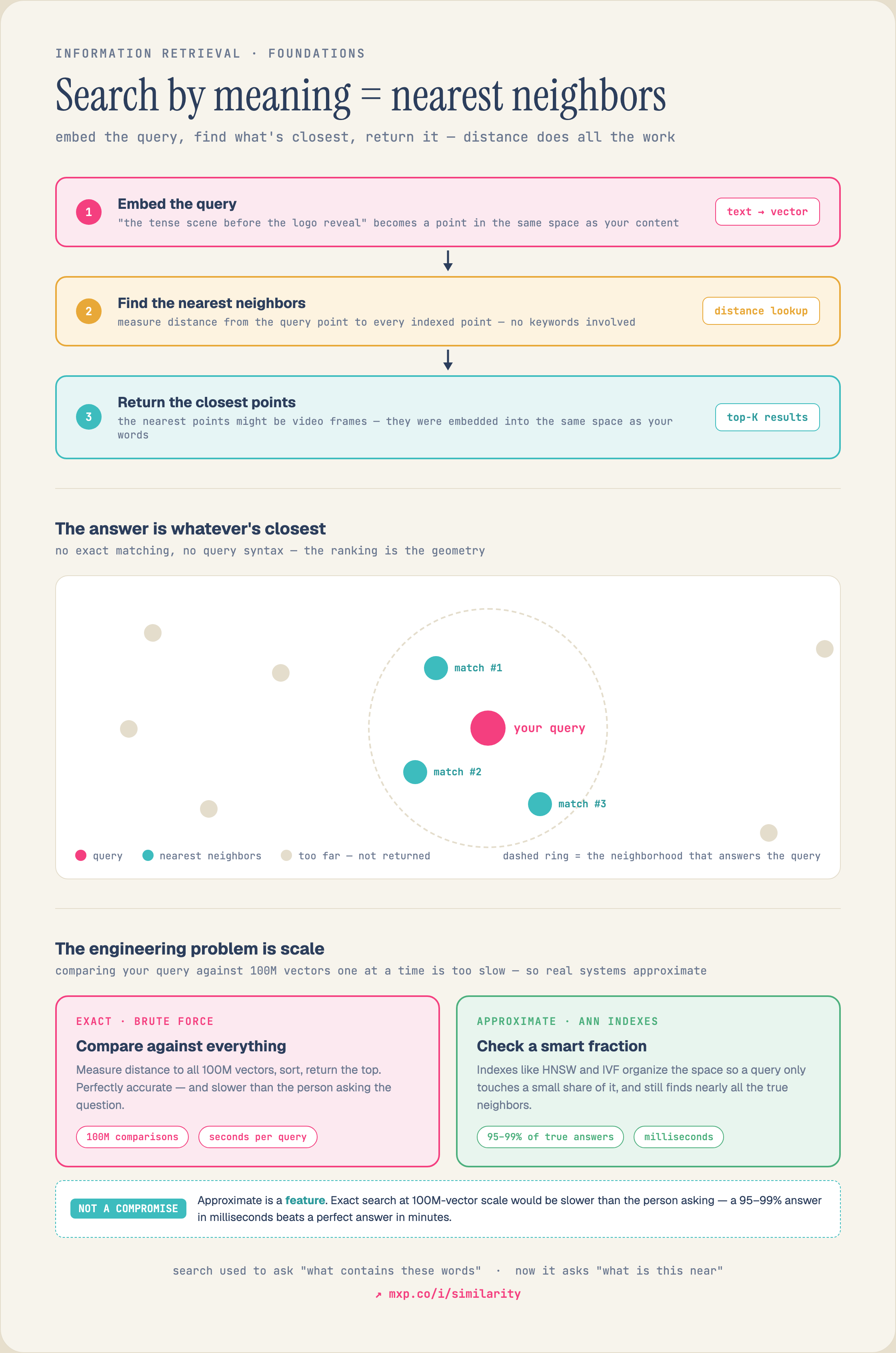
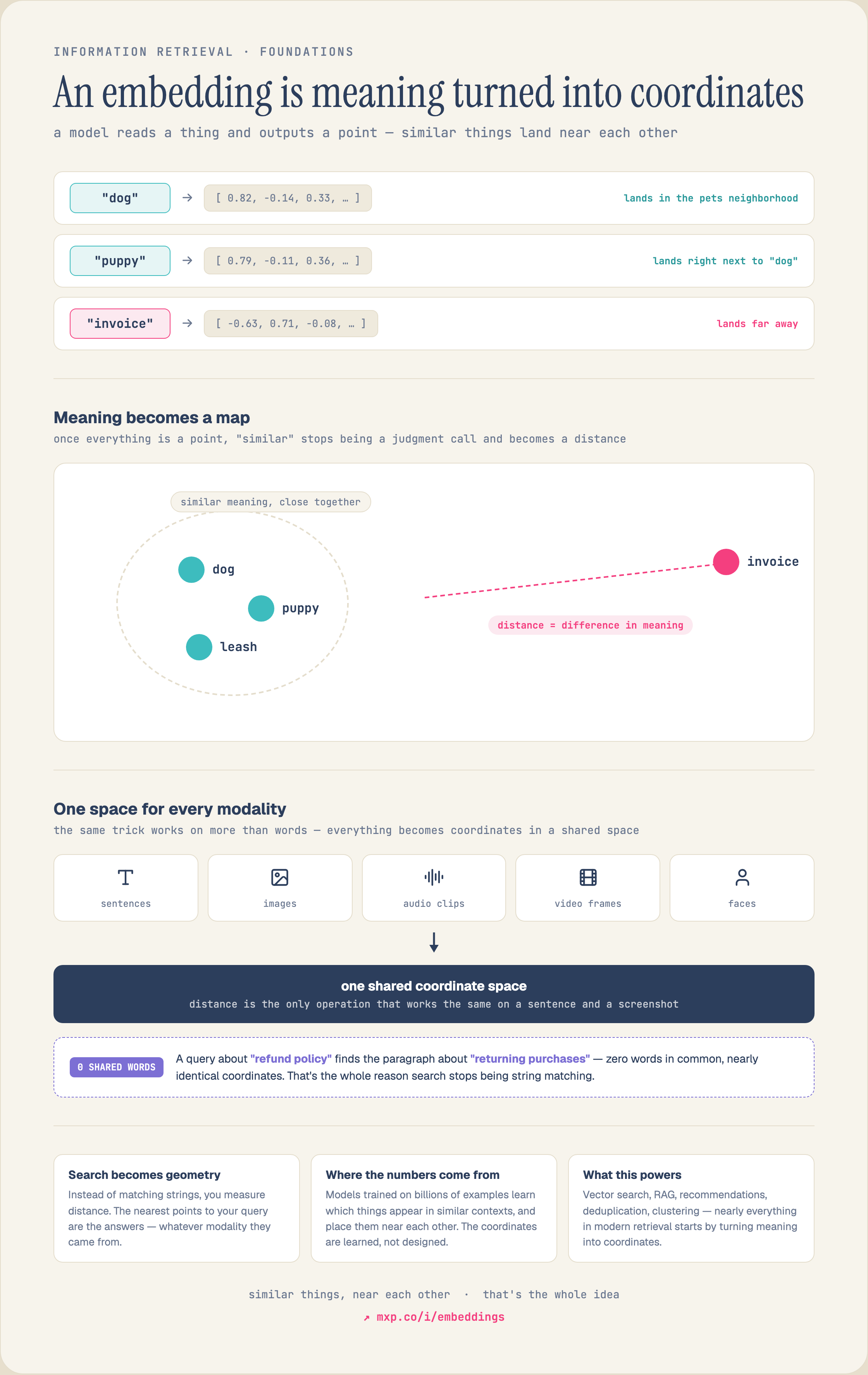
Once everything is a point in space, search gets almost embarrassingly simple: embed the query, find the nearest neighbors, return them.
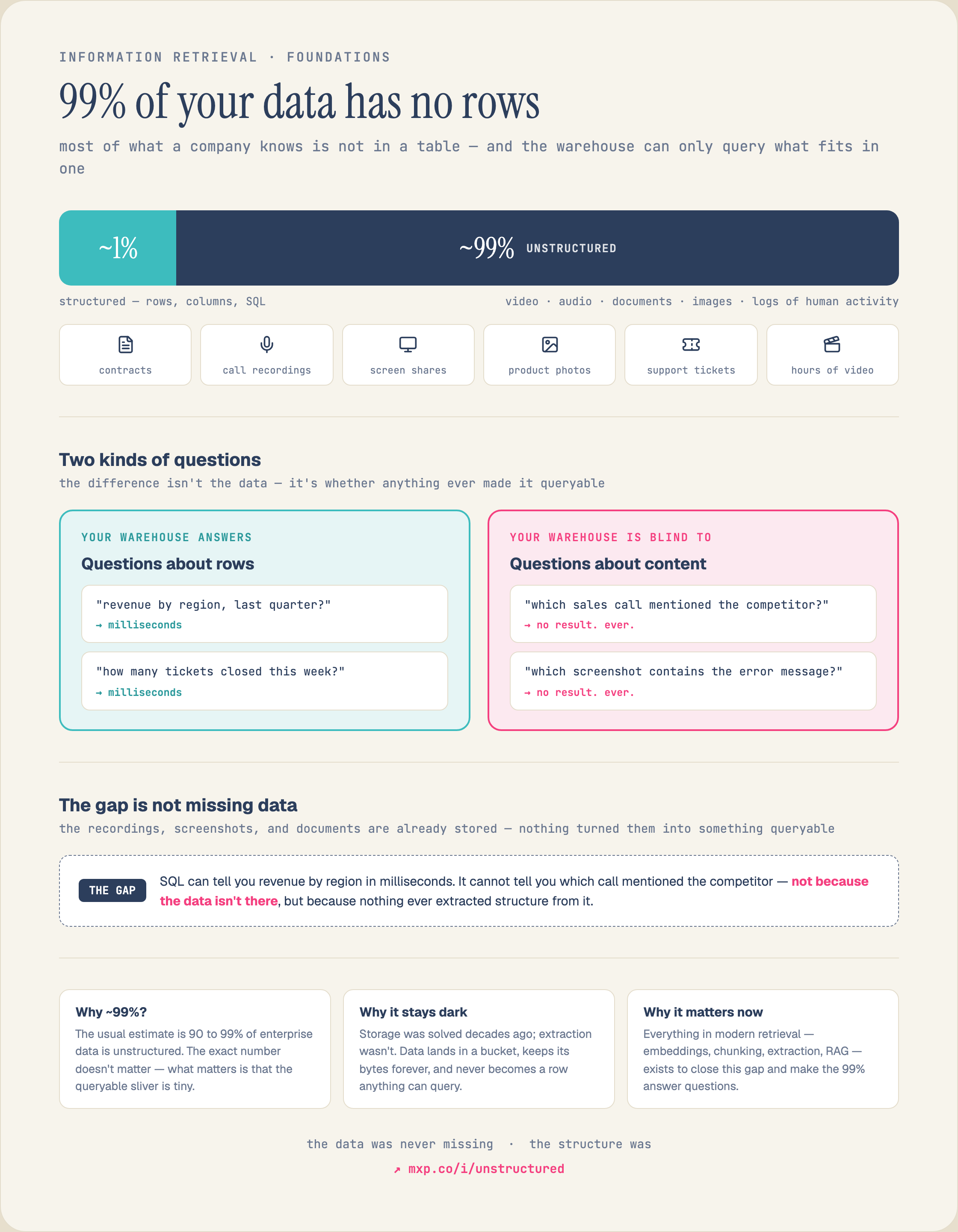
That's vector search. No keywords, no exact matching. Ask for 'the tense scene before the logo reveal' and the nearest points might be video frames, because those frames were embedded into the same space as your words.
The engineering problem is scale. Comparing your query against 100 million vectors one at a time is too slow, so real systems use approximate indexes (HNSW, IVF) that check a smart fraction of the space and return 95 to 99% of the true answers in milliseconds. Approximate is a feature, not a compromise. Exact search at that scale would be slower than the person asking.
We run this on object storage at Mixpeek, vectors living next to the media they describe, but the mechanics are the same everywhere.
Search used to ask 'what contains these words.' Now it asks 'what is this near.'
Where this diagram appears
Run this on your own data
Mixpeek turns video, images, audio, and documents in your object storage into searchable, timestamped results through one API.
Search your own data