An embedding is meaning turned into coordinates
An embedding turns meaning into coordinates: similar things land near each other, across every modality.
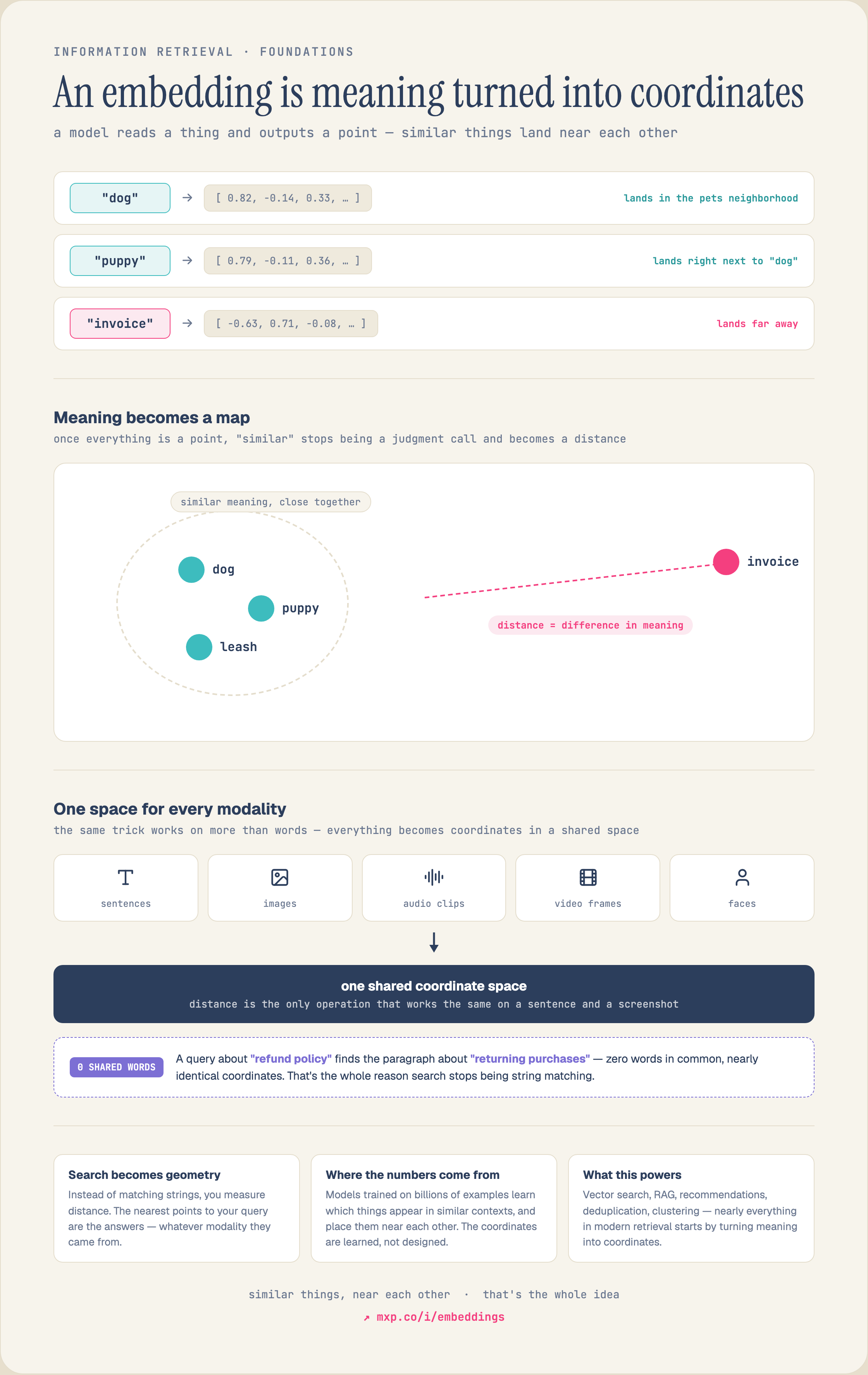
An embedding is the simplest idea in AI that nobody explains plainly: turn a thing into a point, and put similar things near each other.
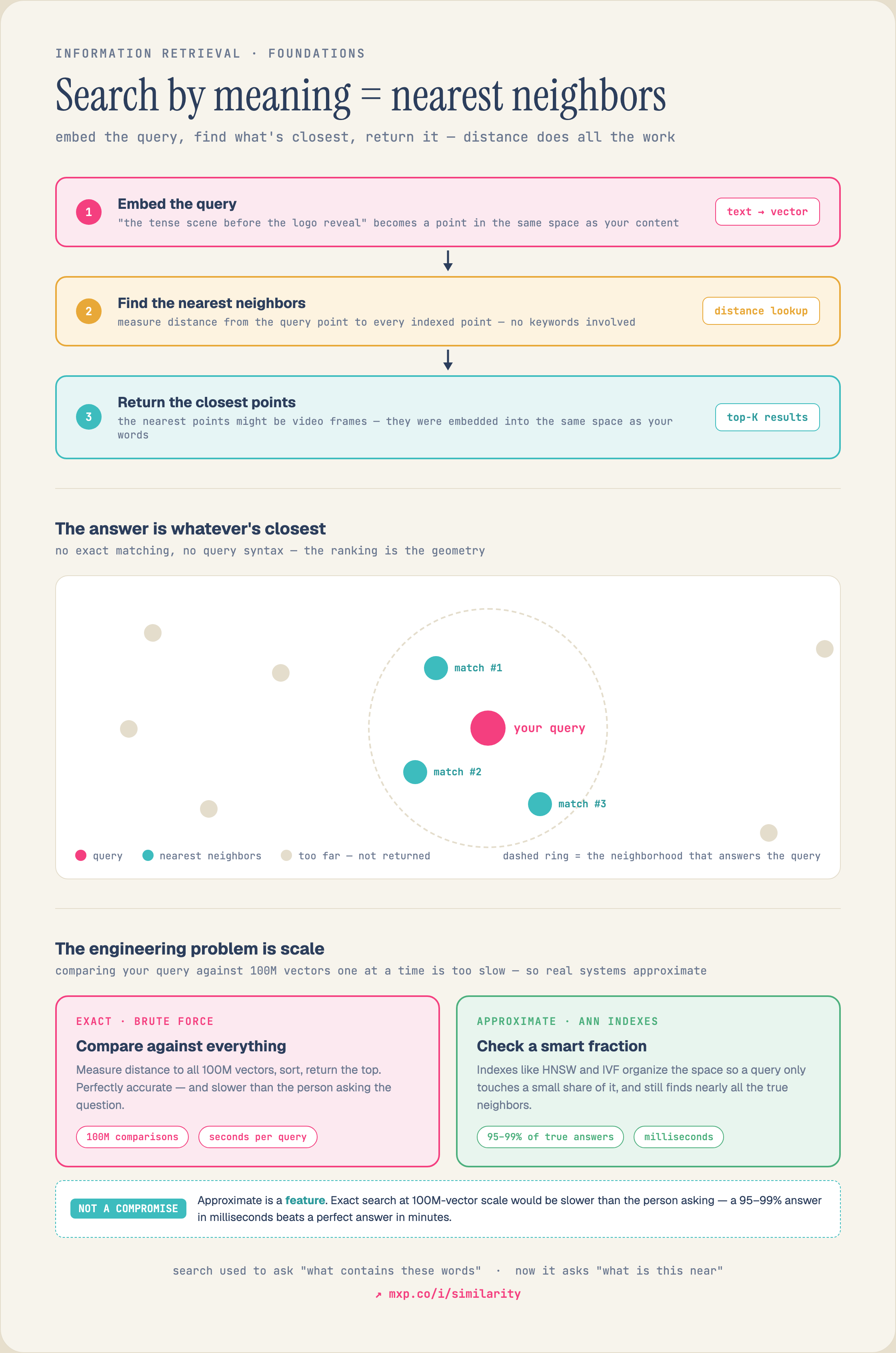
A model reads 'dog' and outputs a list of numbers. Read 'puppy', the numbers land nearby. Read 'invoice', they land far away. The same trick works on images, audio clips, video frames, faces. Everything becomes coordinates in one shared space.
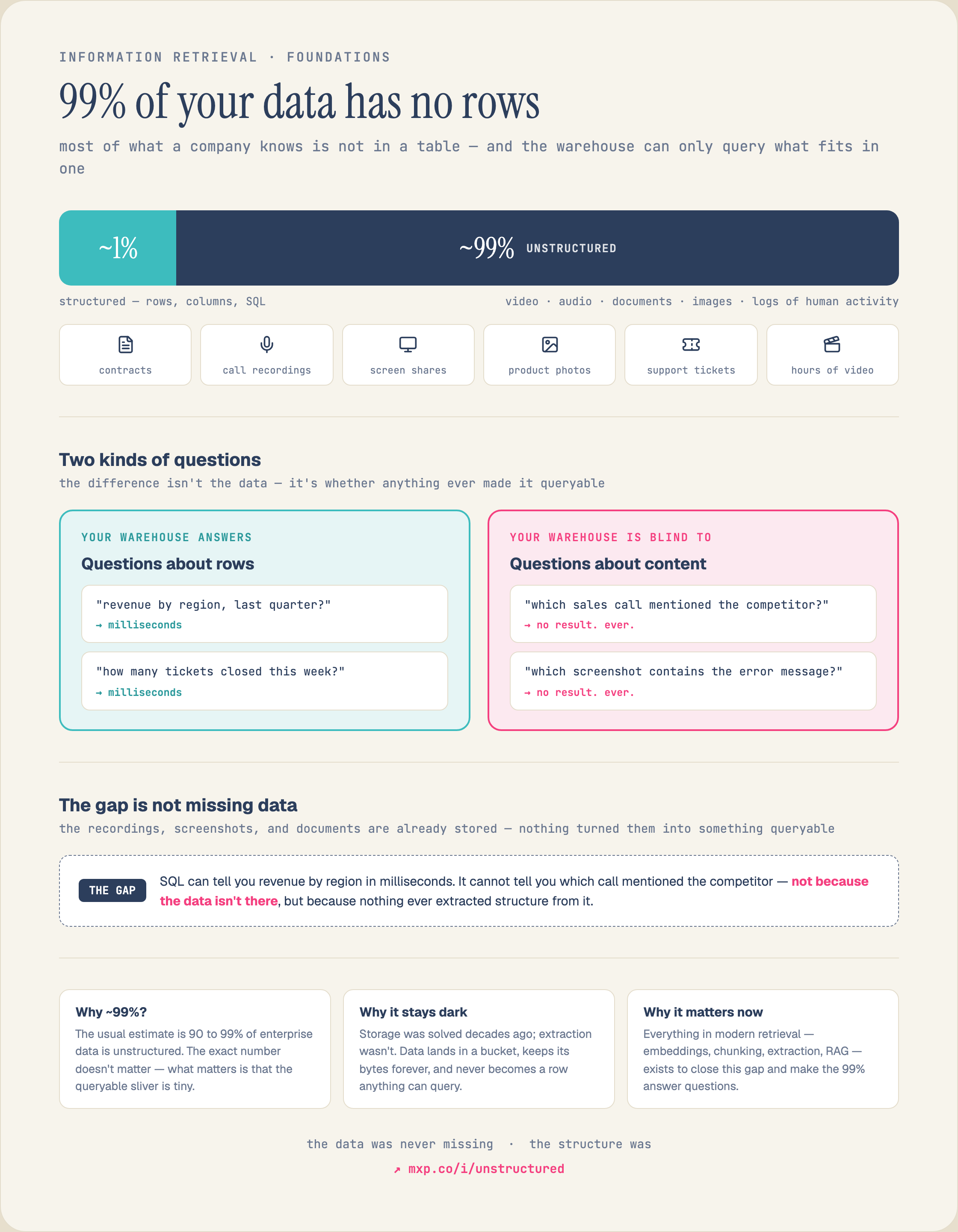
Why this matters: once meaning has a location, search becomes geometry. You stop matching strings and start measuring distance. A query about 'refund policy' finds the paragraph about 'returning purchases' even though they share zero words.
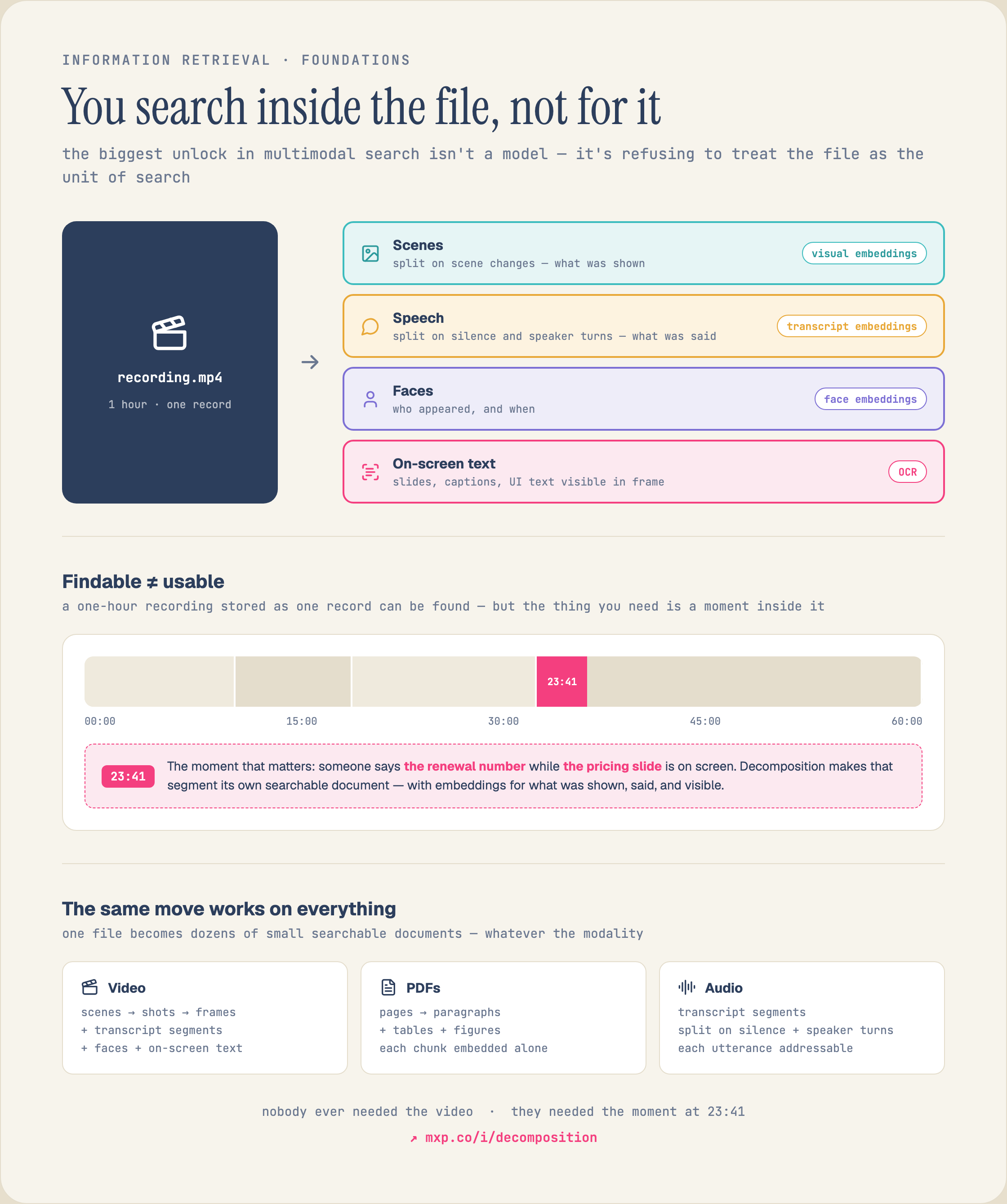
At Mixpeek we compute embeddings for every frame, transcript segment, and page we ingest. Not because embeddings are the product. Because distance is the only operation that works the same on a sentence and a screenshot.
Similar things, near each other. That's the whole idea.
Where this diagram appears
Run this on your own data
Mixpeek turns video, images, audio, and documents in your object storage into searchable, timestamped results through one API.
Search your own data