Pixels in, signals out
Extraction turns a raw frame into structured, searchable signals: the ceiling for every downstream search.
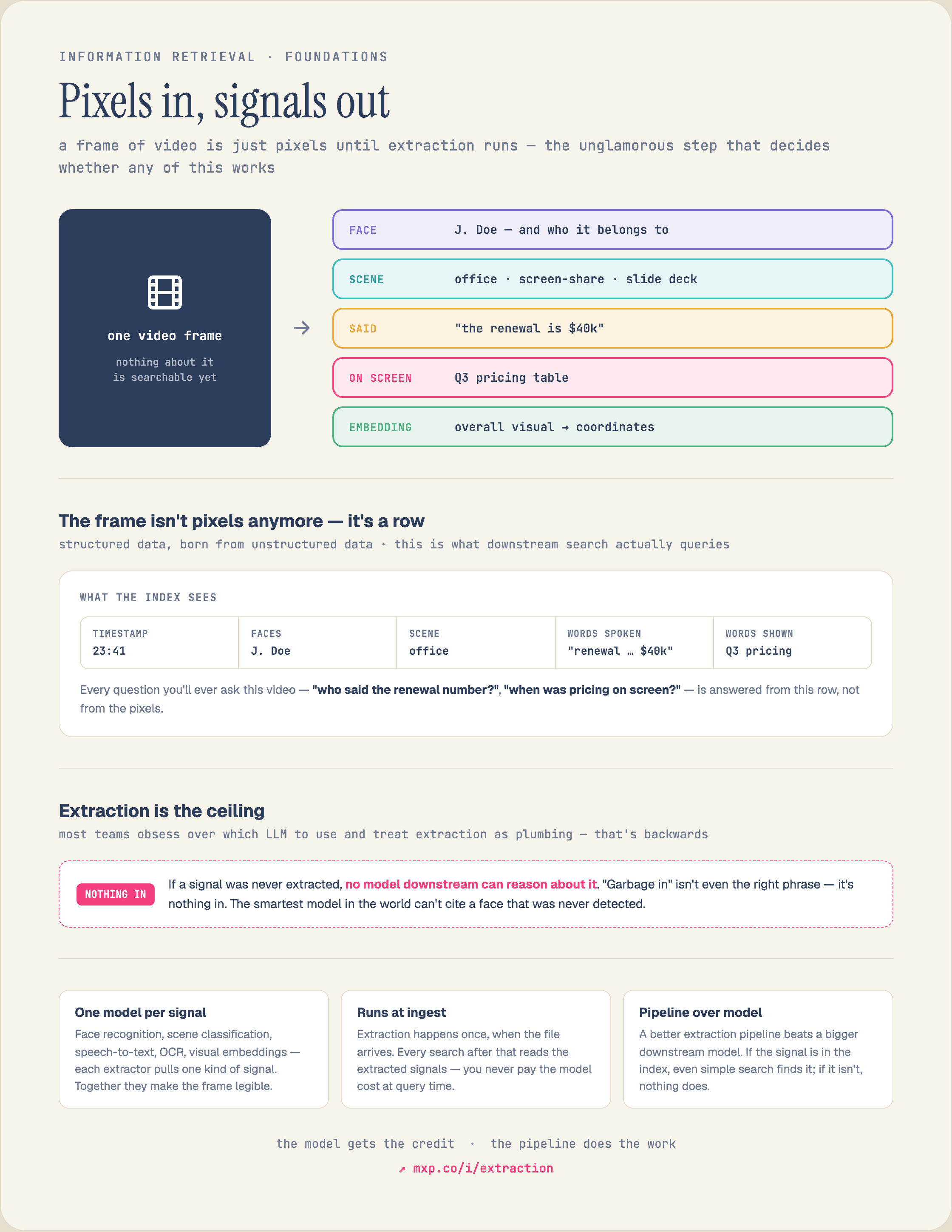
Here's the unglamorous step that decides whether any of this works: extraction.
A frame of video is pixels. Nothing about it is searchable. Extraction runs it through models that each pull out one kind of signal: a face and who it belongs to, the scene type, the transcript of what's being said, the text visible on screen, an embedding of the overall visual.
Now the frame isn't pixels anymore. It's a row: timestamp, faces, scene, words spoken, words shown. Structured data, born from unstructured data.
Most teams obsess over which LLM to use and treat extraction as plumbing. I think that's backwards. If a signal was never extracted, no model downstream can reason about it. Garbage in isn't even the right phrase. It's nothing in.
Mixpeek is an extraction pipeline with a warehouse attached. That ordering is deliberate.
The model gets the credit. The pipeline does the work.
Where this diagram appears
Run this on your own data
Mixpeek turns video, images, audio, and documents in your object storage into searchable, timestamped results through one API.
Search your own data