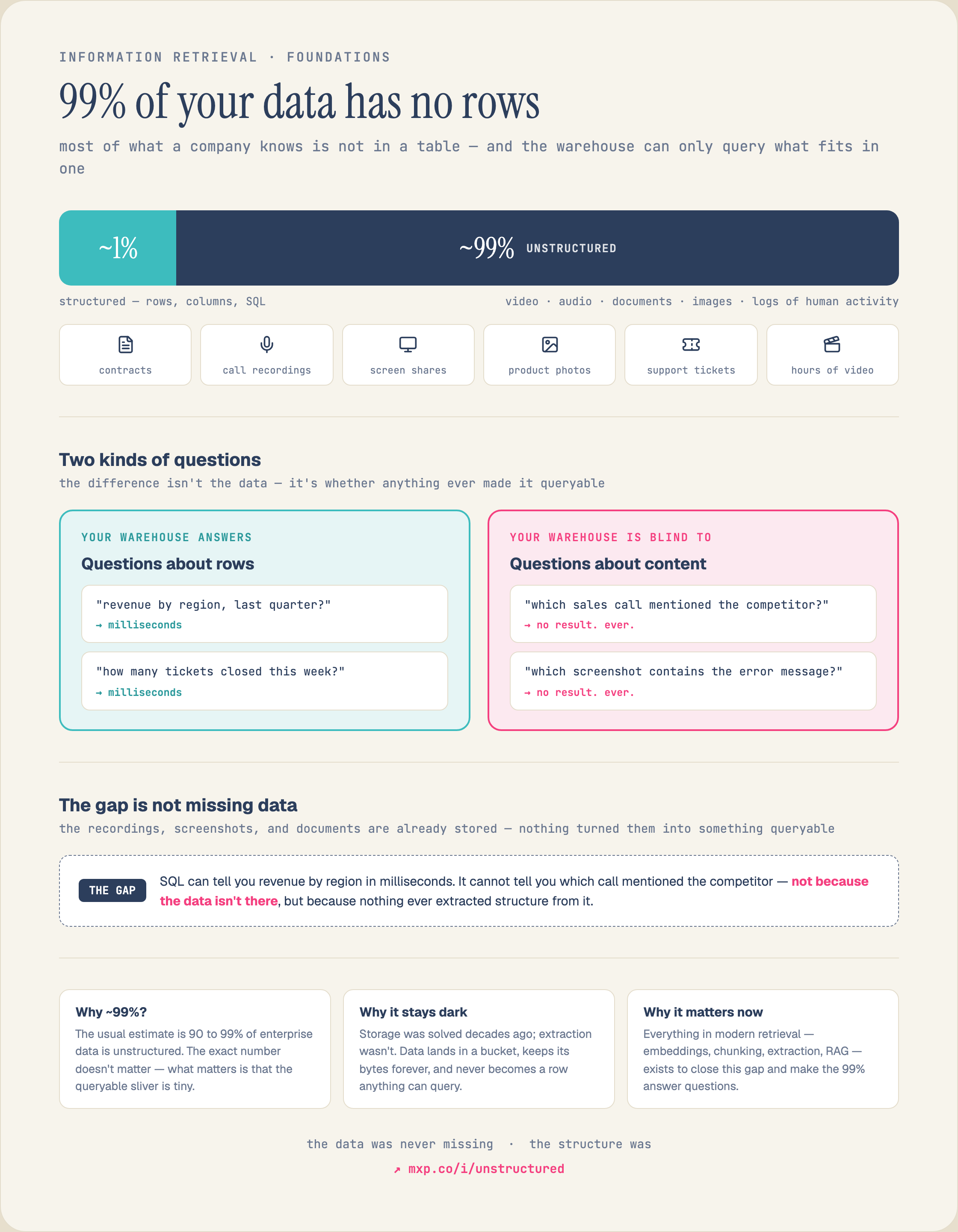
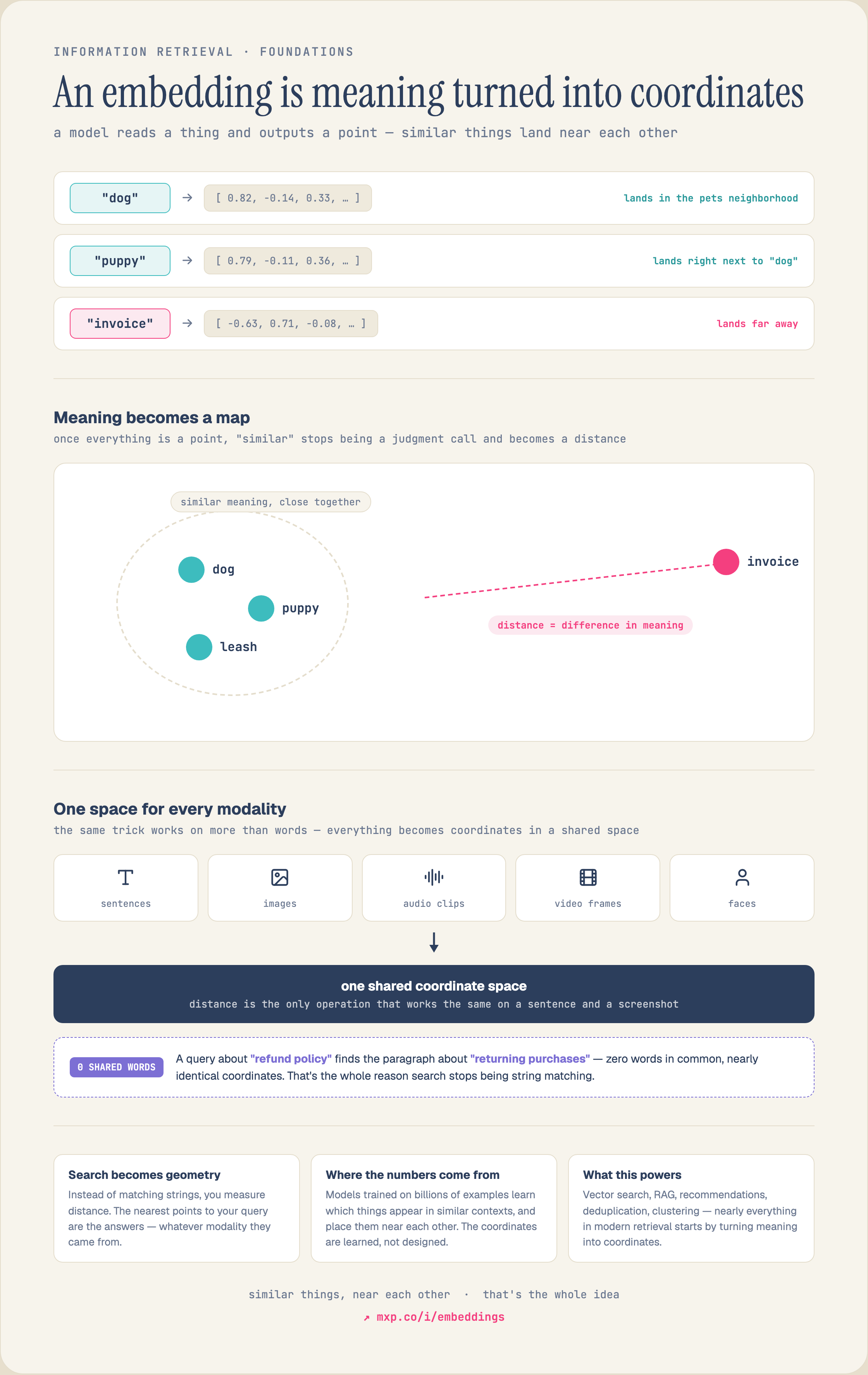
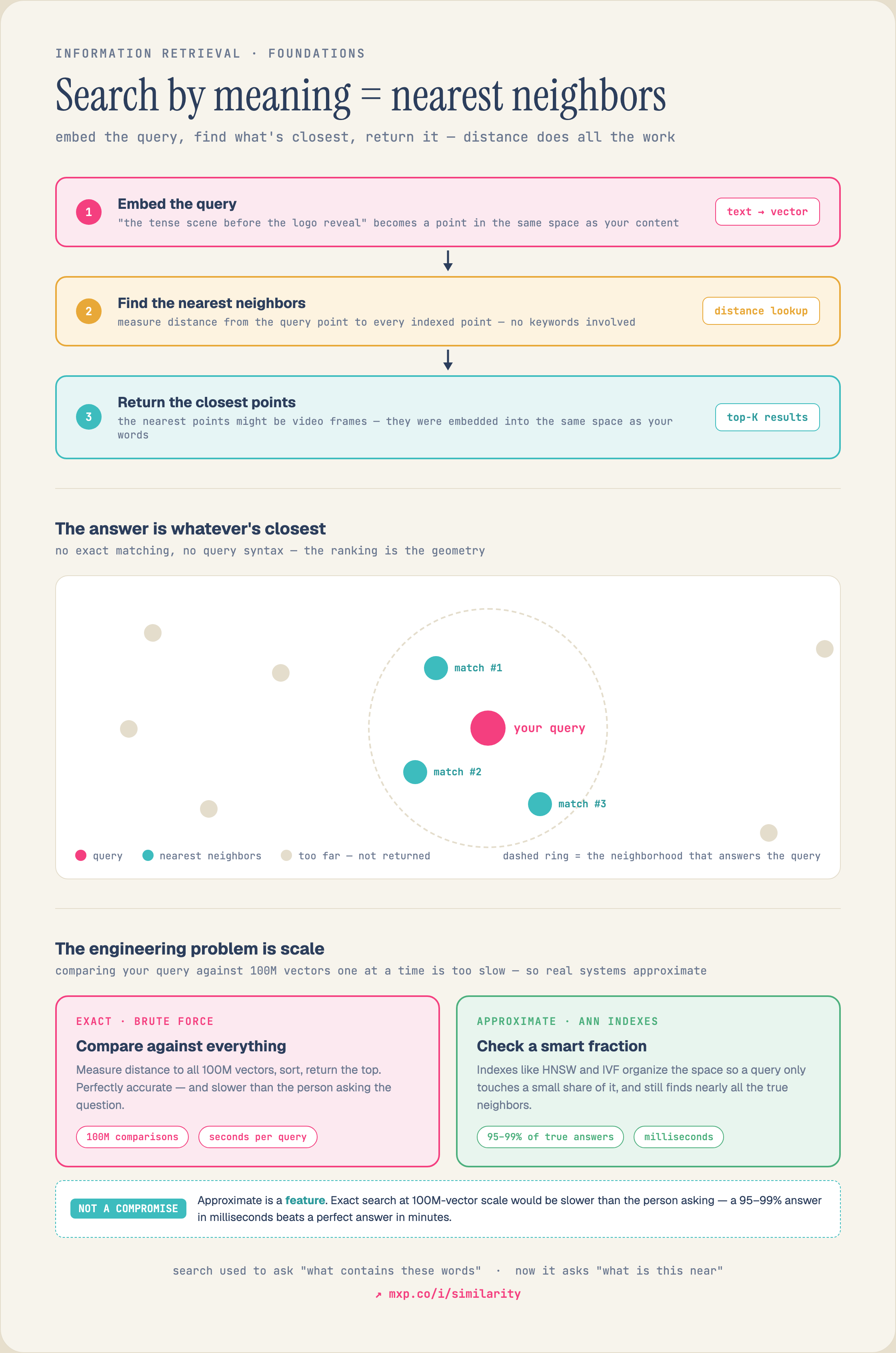
Keywords catch what vectors miss
Hybrid search fuses keyword (BM25) and vector results so each covers the other's blind spots.
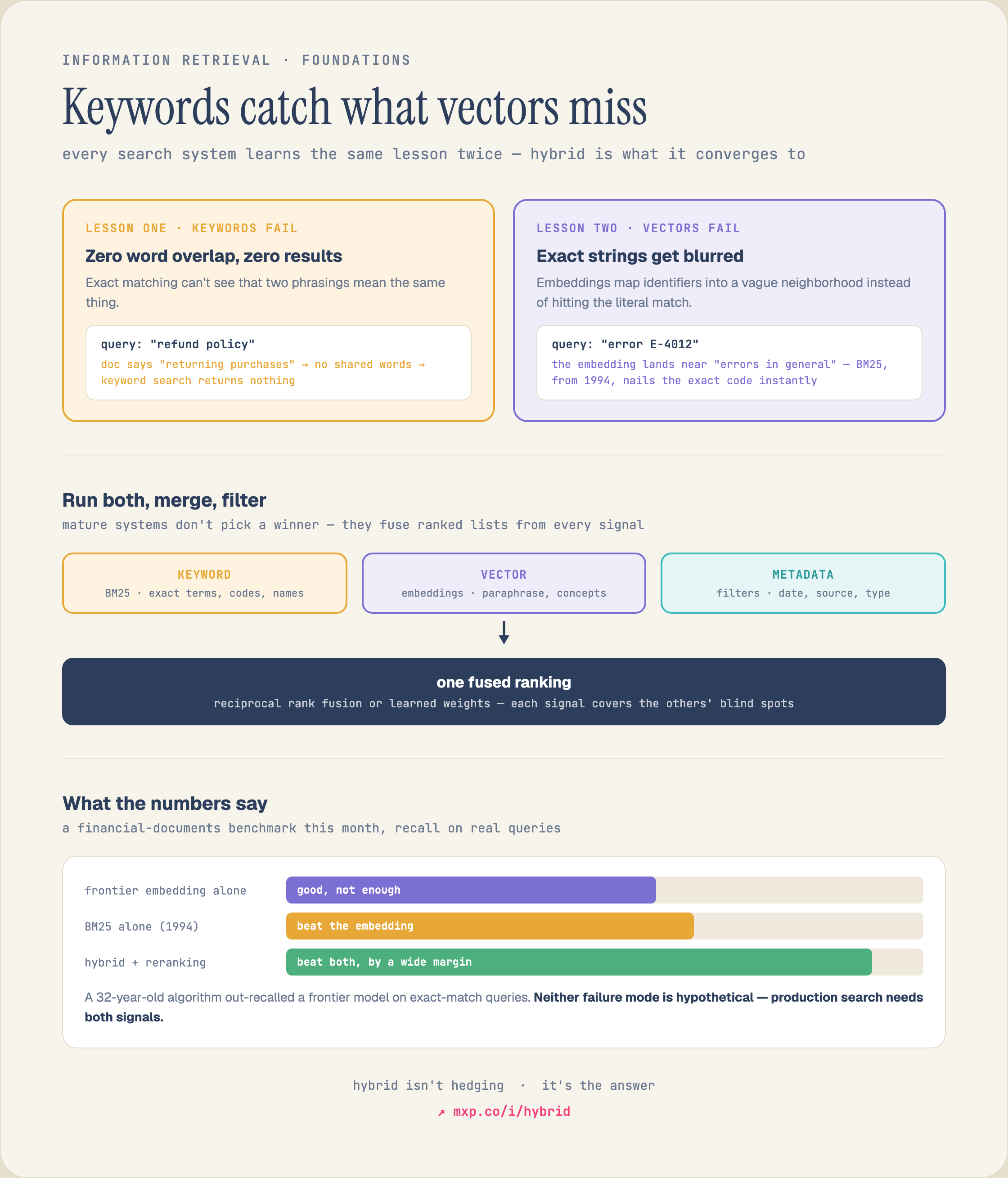
Every search system eventually learns the same lesson twice.
First: keywords fail. A user asks about 'refund policy', the document says 'returning purchases', zero words overlap, no result. So you add embeddings, and semantic matches start landing.
Then: vectors fail. Someone searches an error code, a part number, a person's name, and the embedding blurs it into a vague neighborhood instead of hitting the exact match sitting right there. BM25, an algorithm from 1994, handles that case better than the 2026 one.
So mature systems run both and merge the results, then filter on metadata. A financial-docs benchmark this month had BM25 alone beating a frontier embedding model on recall, and hybrid plus reranking beating both by a wide margin.
Mixpeek retrievers run keyword, vector, and metadata stages in one pipeline because that's what production search converges to anyway.
Hybrid isn't hedging. It's the answer.
Where this diagram appears
Run this on your own data
Mixpeek turns video, images, audio, and documents in your object storage into searchable, timestamped results through one API.
Search your own data