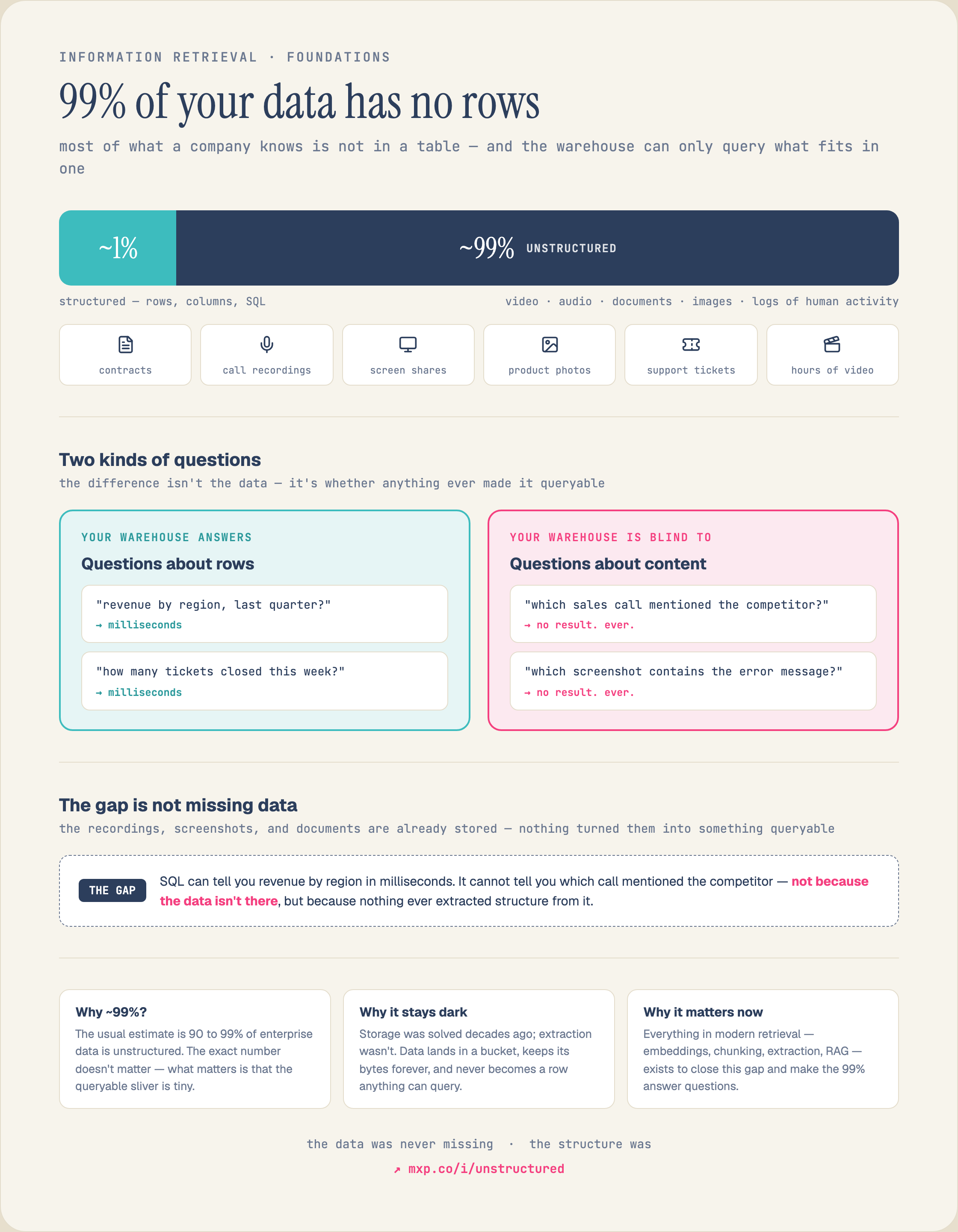
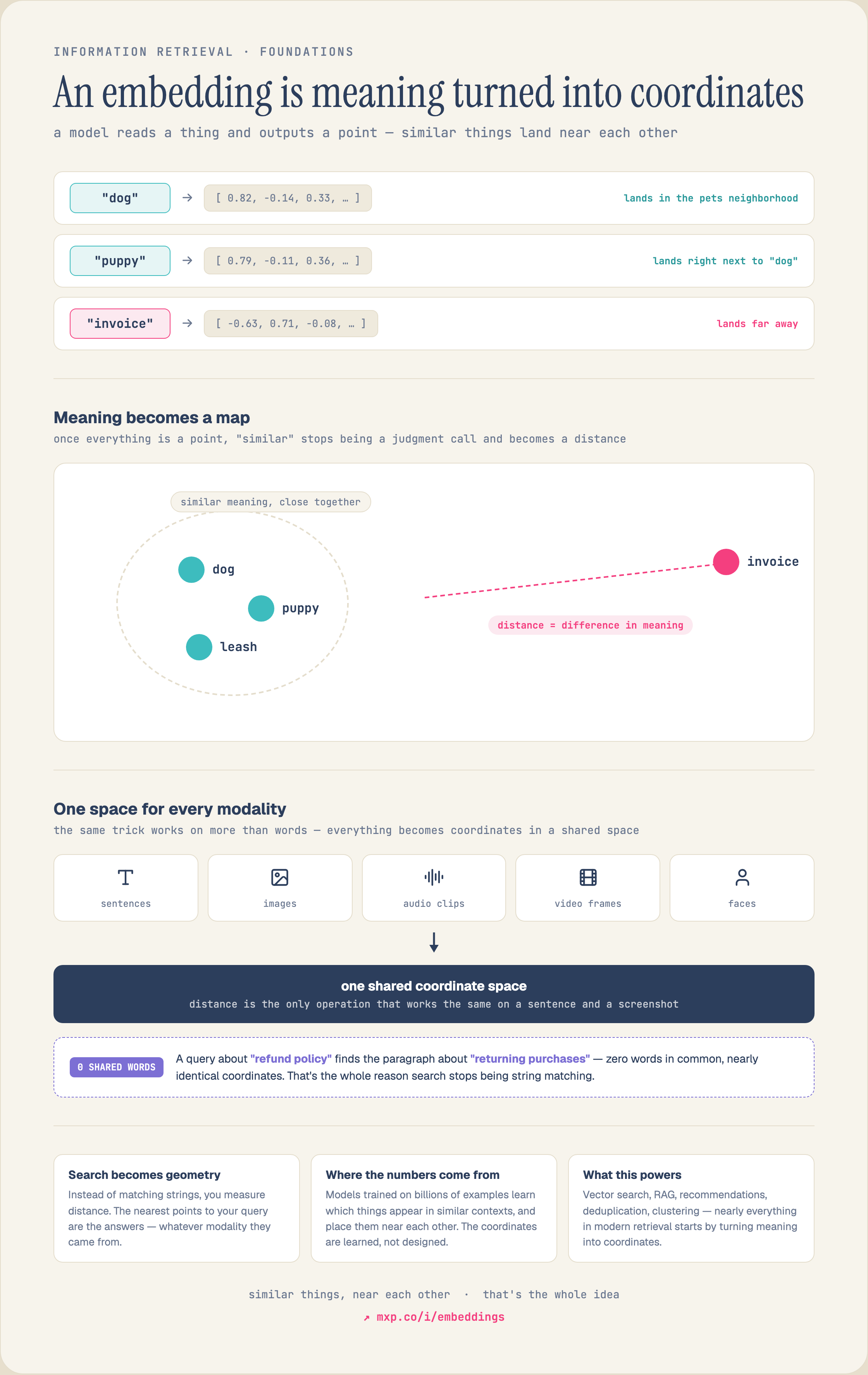
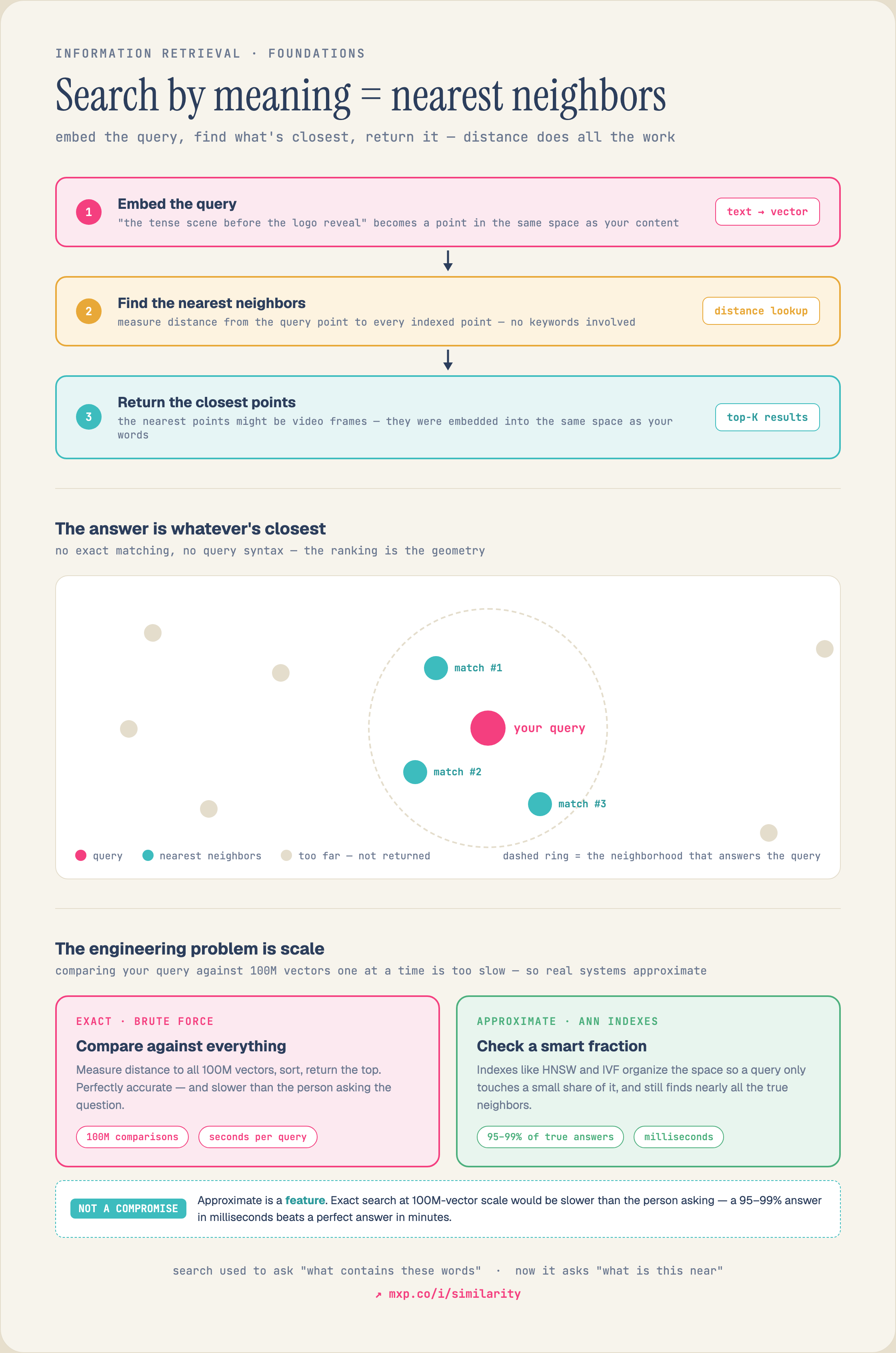
The model answers with what you feed it
In RAG, retrieval sets the quality ceiling: the model answers from the passages you feed it.
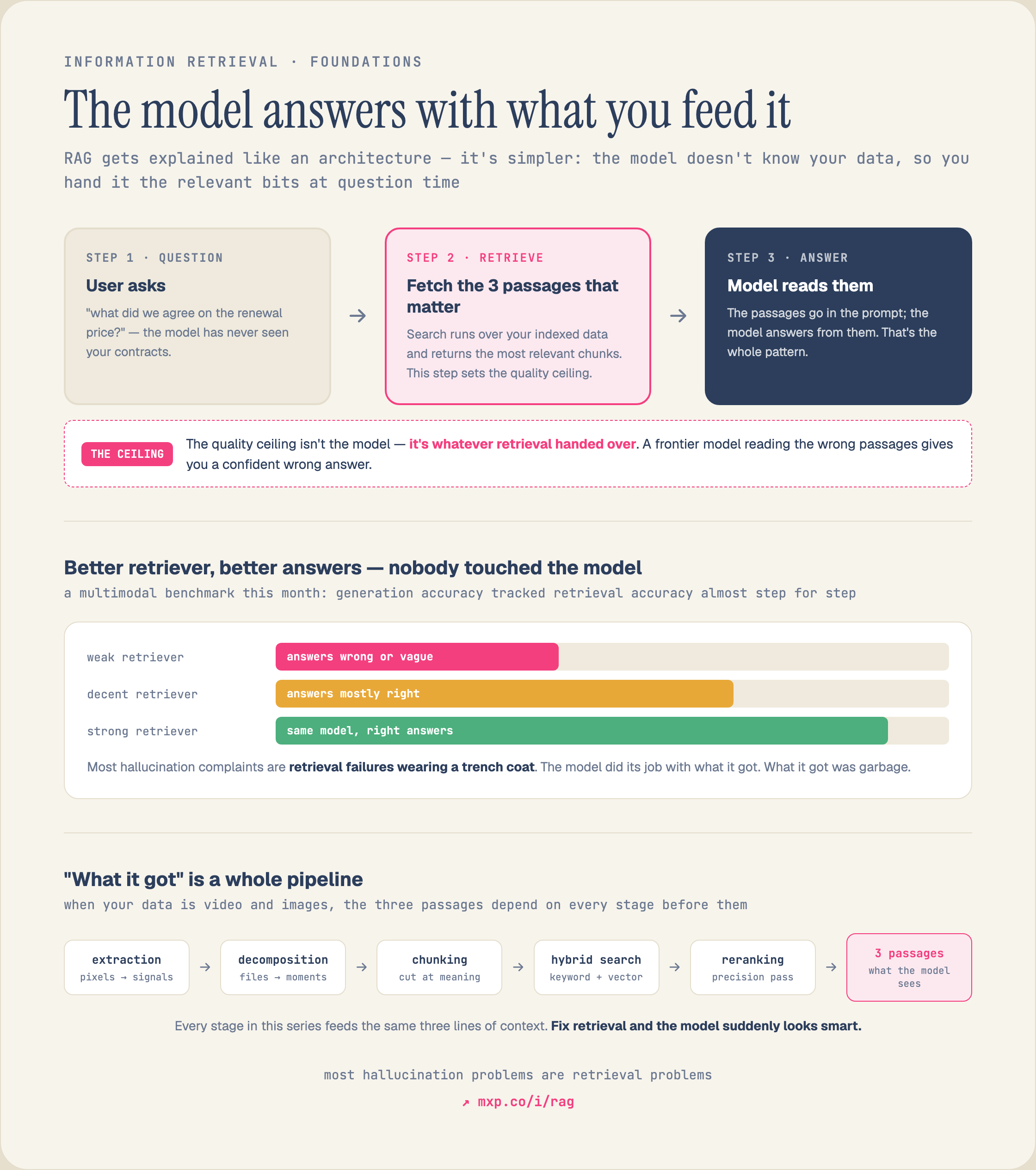
RAG gets explained like it's an architecture. It's simpler than that: the model doesn't know your data, so you hand it the relevant bits at question time.
Retrieve the three passages that matter, put them in the prompt, let the model answer from them. That's the whole pattern. And it means the quality ceiling isn't the model. It's whatever retrieval handed over.
A benchmark this month made that concrete: on multimodal queries, generation accuracy tracked retrieval accuracy almost step for step. Better retriever, better answers. Nobody touched the model.
This is why I keep saying most hallucination complaints are retrieval failures wearing a trench coat. The model did its job with what it got. What it got was garbage.
When your data is video and images rather than text, 'what it got' depends on extraction, decomposition, chunking, hybrid search, reranking. Everything in this series feeds the same three lines of context.
Fix retrieval and the model suddenly looks smart.
Where this diagram appears
Run this on your own data
Mixpeek turns video, images, audio, and documents in your object storage into searchable, timestamped results through one API.
Search your own data